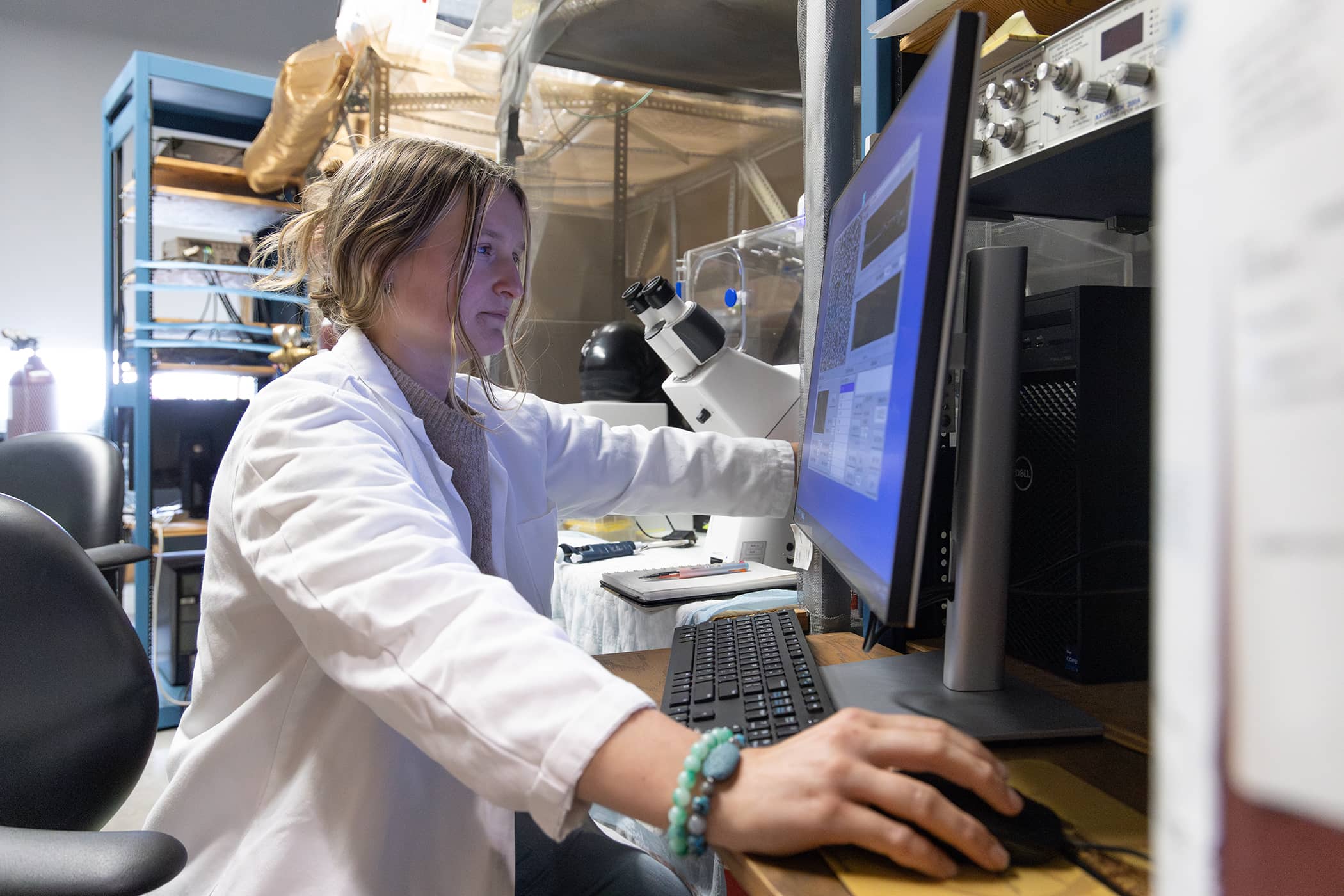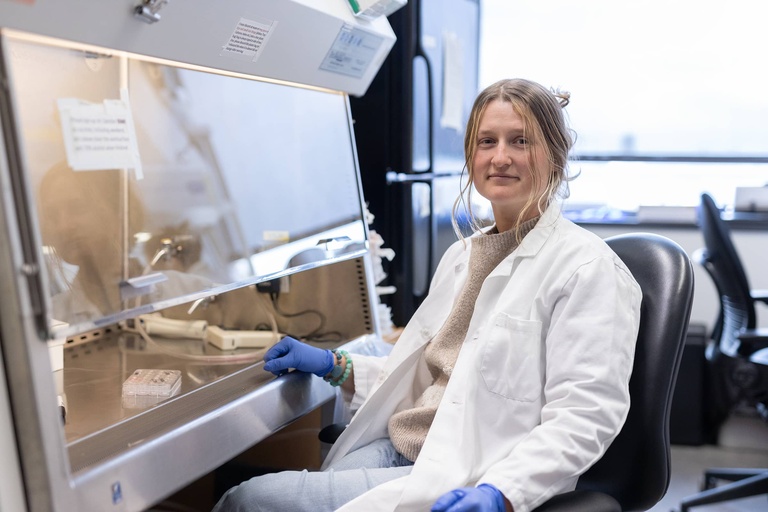
From childhood days spent helping in her father’s laboratory to carving her own path in biomedical engineering, becoming a researcher at the University of Iowa came naturally for Winter Philibert.
Philibert studies in the Roy J. Carver Department of Biomedical Engineering, where her doctoral research aims to improve the interaction between mucus and cilia in the lung’s self-cleaning system known as mucociliary transport.
Her work analyzes the physical properties of mucus and how the lungs clean themselves using cilia, the small, finger-like projections inside of the lungs, in both healthy and diseased models.
Philibert compares some of the properties of mucus to honey. “We've all had that problem where we try to transfer honey out of a spoon, and that trapping property of the honey obviously makes it great, but hard to move,” she explains.
“It's not just enough for your mucus to trap the dirt, dust, debris, microbes, and bacteria that we breathe in every single day. It also has to be moved up and out,” she notes.
“We study not only how that impacts patients, but also, what can we do to help improve the physical properties of mucus so that patients suffering from disease can breathe just a little bit easier?”
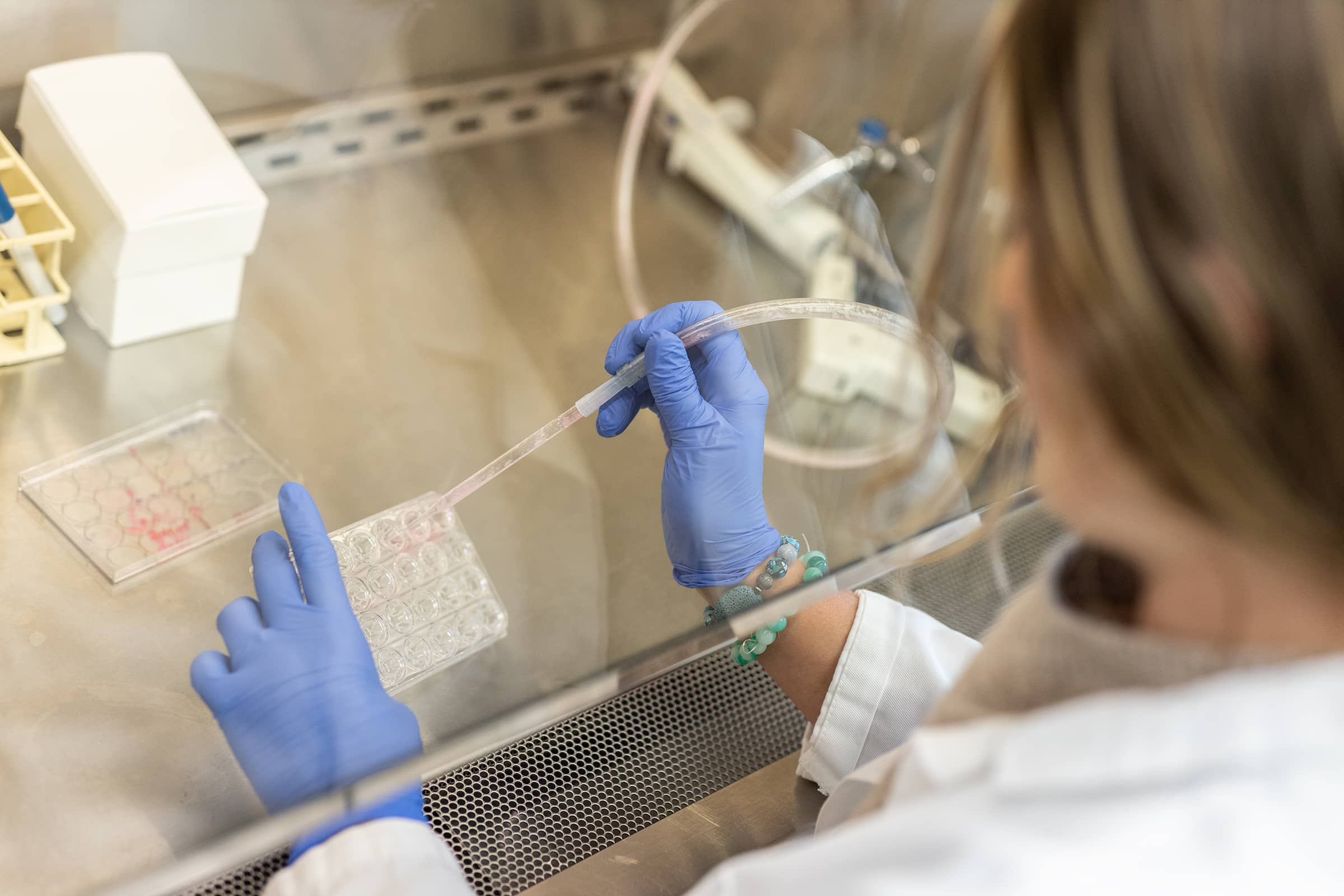
To study this, Philibert uses a preclinical model of the human disease primary ciliary dyskinesia (PCD)—a genetic disorder affecting the cilia—as well as samples of cystic fibrosis—a condition that causes cells to produce mucus that is thicker than normal. By growing cell cultures from patient samples, she can measure highly reactive molecules produced in these tissues. On the computational side, she’s also working to advance an imaging technique, differential dynamic microscopy (DDM), to look at small mucus samples of about 100 microliters at a time. This novel approach would allow researchers to study the airway mucus interface non-invasively.
Facilitating success
Philibert says the laboratory of her mentor Mahmoud Abu Aliwa, MD, is well equipped to bolster her research. Benefits include access to drug treatments, a cell culture core, and access to multiple experts. The breadth of opportunities for hands-on experiences encouraged her to first join the group.
“To be able to interact with patient samples, because you know those patients are literally two buildings down, is also very unique and makes the University of Iowa very poised for healthcare research.”
In tandem with her studies at Iowa, Philibert serves as chief technology officer for Behavioral Diagnostics, LLC, which is developing new ways to assess smoking levels and their impact on lung cancer risk using epigenetics and machine learning. Post-graduation, she aspires to continue her work on lung health in either the research field or in commercial settings.
Accolades and support
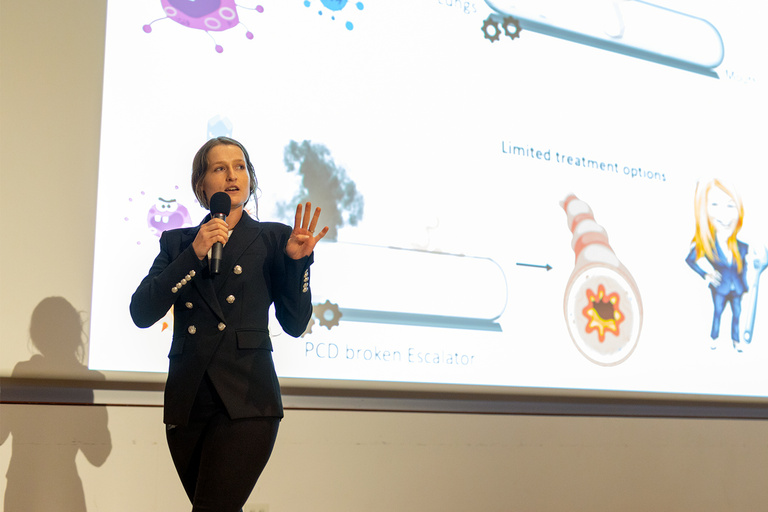
In addition to being a 2026 Dare to Discover honoree, Philibert is a three-time finalist in the Graduate College’s Three Minute Thesis (3MT) research competition, having earned an Honorable Mention in 2022. The doctoral student cites this experience as vital for public speaking and for having improved her lab presentations.
“It was great for that experience because now when I give a floor update on my lab, I can call back some of those skills of reducing it down to easier words to digest so that I can communicate my research more effectively,” she cites.
Philibert was also a 2023–2024 Iowa Innovation Leadership Fellow. The year-long educational experience introduces fellows to people, programs, and resources that influence creating solutions to societies unmet needs in healthcare.
“I really love that part about University of Iowa. That's very unique to us,” she says of the fellowship. “To have it so easily accessible on our campus is huge.”
Family ties at UI
Raised in Iowa City, Philibert credits her upbringing as the foundation for her interest in scientific research. Her parents met at the UI, where her mother was an administrator, and Philibert and her siblings were immersed in science thanks to their father, Robert Philibert, MD, PhD. By high school, they were learning how to handle and label samples and how to analyze data at his lab.
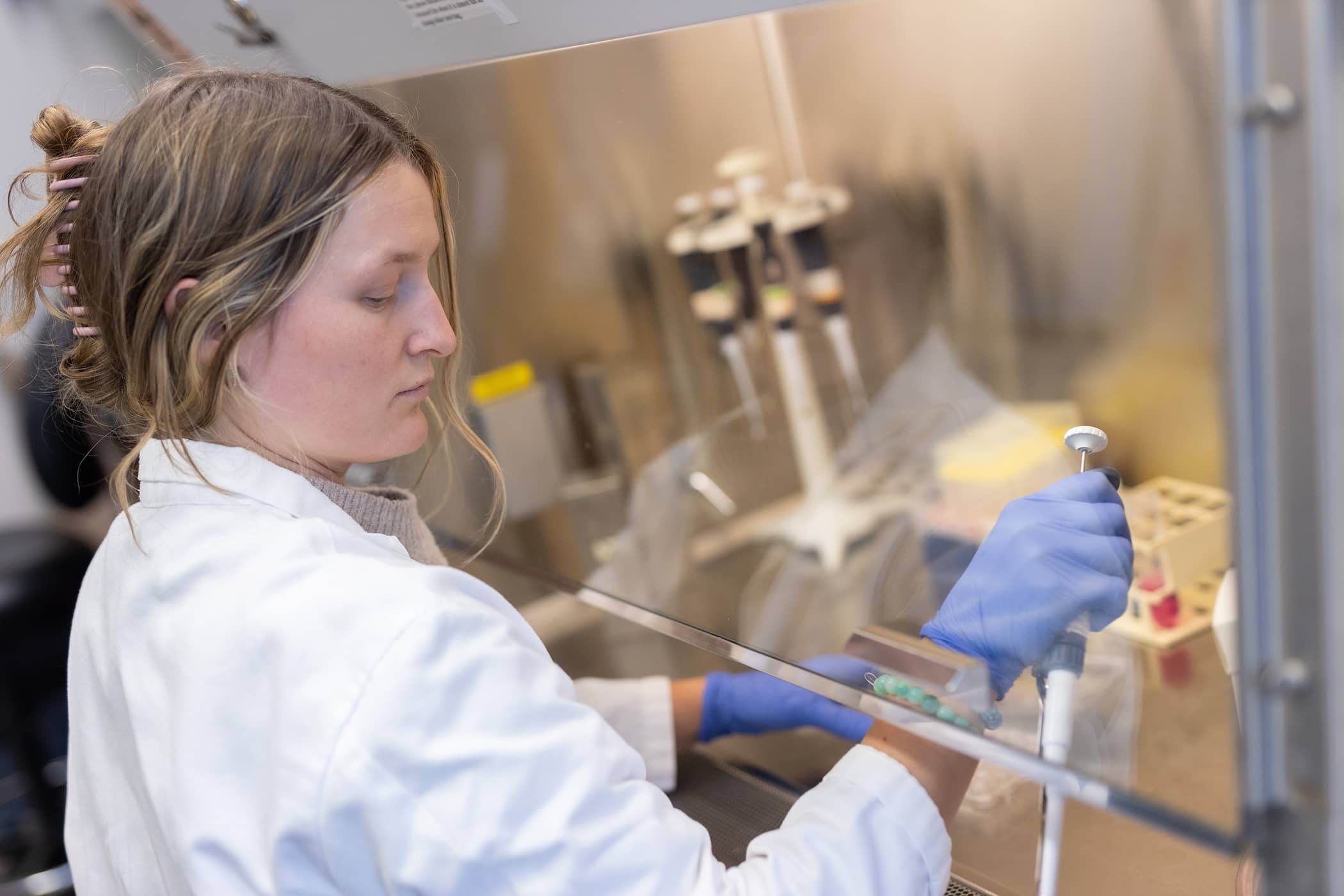
“Just getting to sit there and observe, or pipette a row of samples under his supervision, helped shape the scientists we are today,” she cites, noting that he would also give her classmates lab tours in order to share the science bug beyond family.
“We were so fortunate to be involved in projects that led to published papers while still in high school,” she says. “That experience really helped me decide that I loved medicine and research going into college—which I think is a godsend, considering how hard it is to figure out what you want to do when you grow up.”
Philibert says she still visits her father’s lab to chat science and receive guidance.
“Support systems are important to success,” she insists. “We all like to hear stories of someone who did it all on their own, but my success has been built on the guidance and support of those around me.”