For Jacob Payne, graduate research means expanding the possibilities of space exploration.
Conventional spacecraft navigation uses Earth-based tools like the Global Positioning System (GPS). As spacecraft travel far from Earth, satellite-based GPS is no longer available, and large radio telescopes are required for communications and tracking. Radio tracking is very precise, but it becomes less accurate the farther a spacecraft moves from Earth.
As a graduate research assistant in the University of Iowa’s Department of Physics and Astronomy, Payne is studying how X-ray telescopes can improve navigation by observing stars called pulsars. These incredibly dense but small stars create a consistent flash of light comparable to a lighthouse beacon. This flash is uniform and reliable throughout the Solar System and can serve as a natural GPS.
With the technology in its infancy, Payne aspires to optimize pulsar-based navigation for more spacecraft networks, reducing the need for an Earth-based GPS connection.
The challenge, he says, is building a detector small enough to observe these stars. While radio telescopes are often about 100 feet in diameter, X-ray wavelengths are much smaller and therefore don’t require such large telescopic equipment, but they still prove cumbersome. Payne adds that X-ray telescopes are refrigerator-sized, and it doesn't work very well to send that into space just as a resource.
“Spacecraft outside of Earth’s orbit use the Deep Space Network and radio ranging, but that's a constrained resource and we're already approaching a limit,” he explains. “If we want to build more spacecraft, launch bigger networks of vehicles to go explore the moon in more detail, build lunar networks for supporting (the spaceflight mission) Artemis, or send spacecraft to (Jupiter's moon) Europa, we would need a whole fleet of spacecraft out there, and we'd need all of them to be keeping track of what time they think it is and where they are.”
A pulsar navigation system, Payne says, would allow them to each do that on their own autonomously, without relying on an Earth-based center point.
Optimization in the lab
A member of the Optics and Astronomical Technologies Laboratory, Payne brought the pulsar navigation project to Iowa based on his research at Georgia Tech, where he earned a BS and MS in Aerospace Engineering.
In 2025, the doctoral candidate received the Future Investigators in NASA Earth and Space Science and Technology (FINESST) Fellowship, a three-year $150,000 grant that allows him to focus on research full time. He also received the Iowa Space Grant Consortium (ISGC) Graduate Fellowship, which offers additional support from the State of Iowa to enable him to focus on this project.
Payne’s efforts to optimize space navigation involve a variety of tasks and experiments. Lately, he’s been analyzing recordings of pulsars from the last seven years to find the brightest ones to use as a navigation reference.
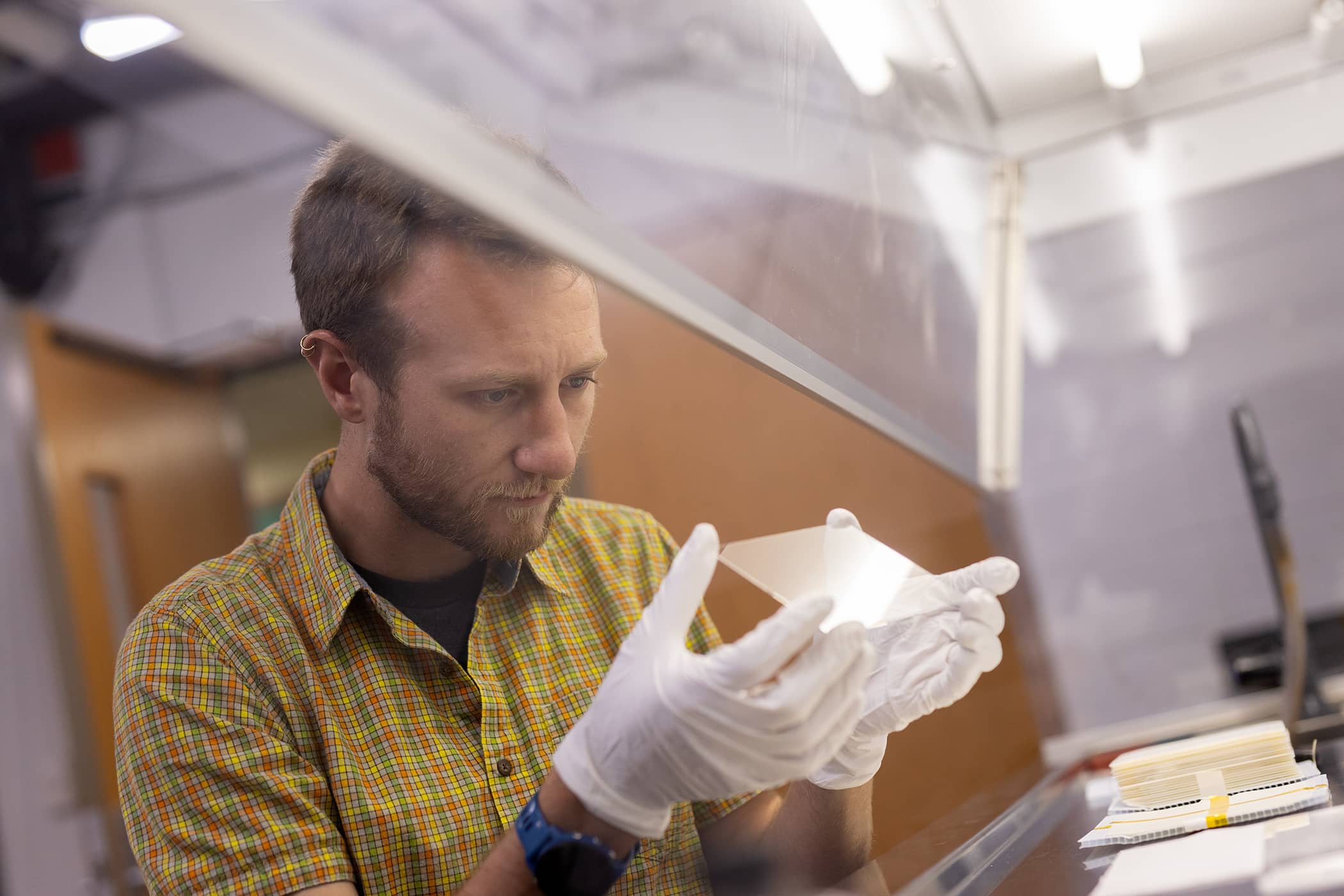
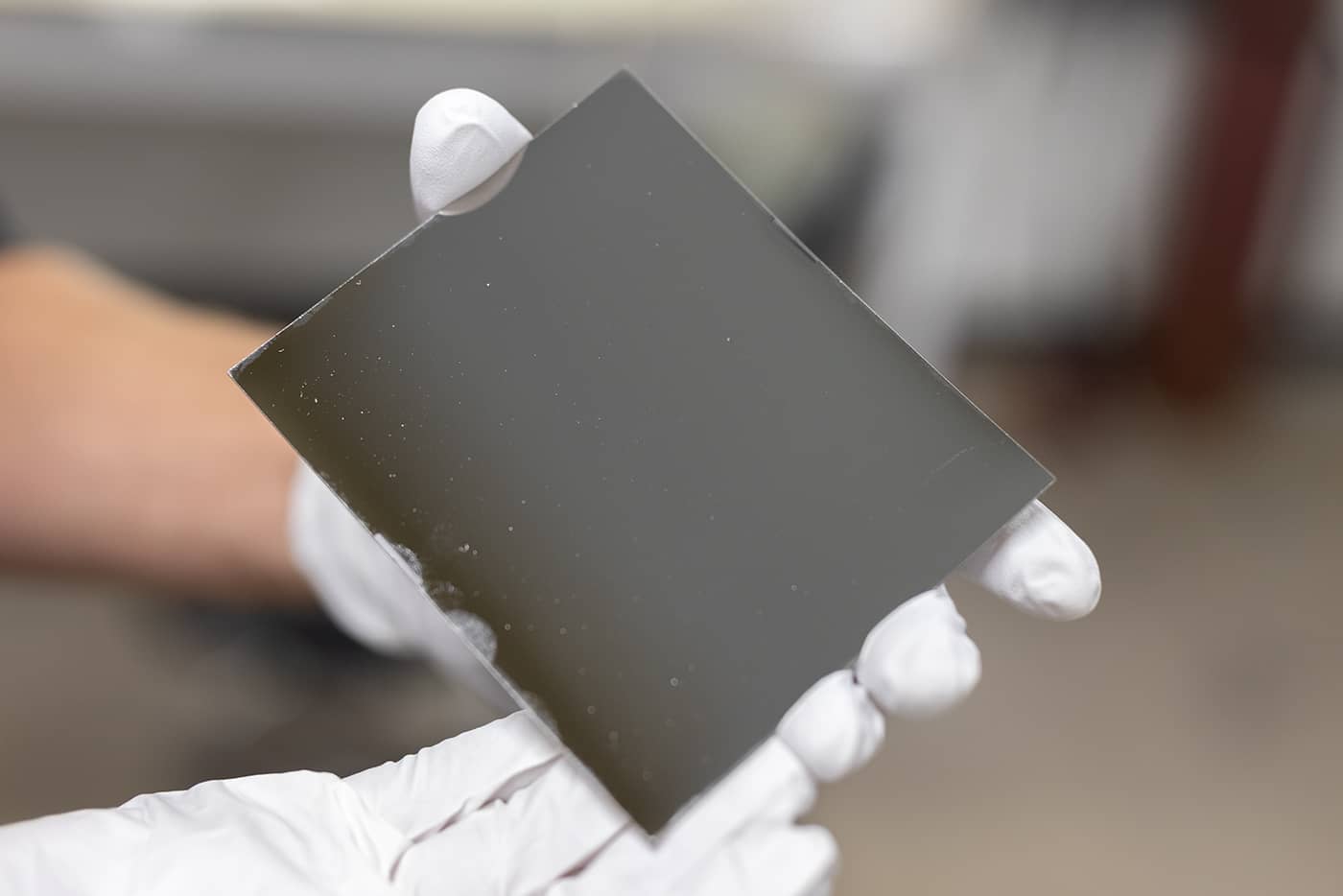
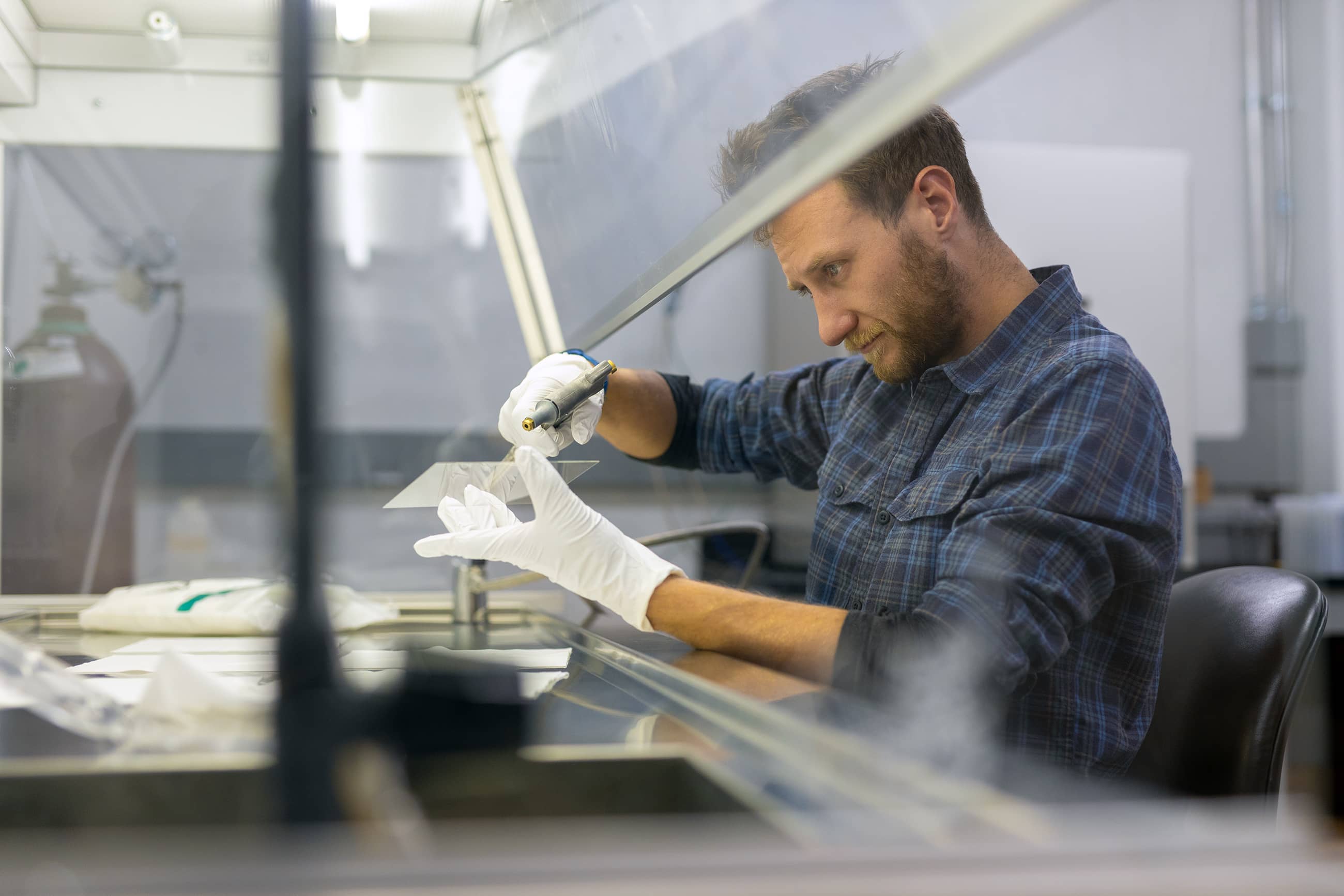
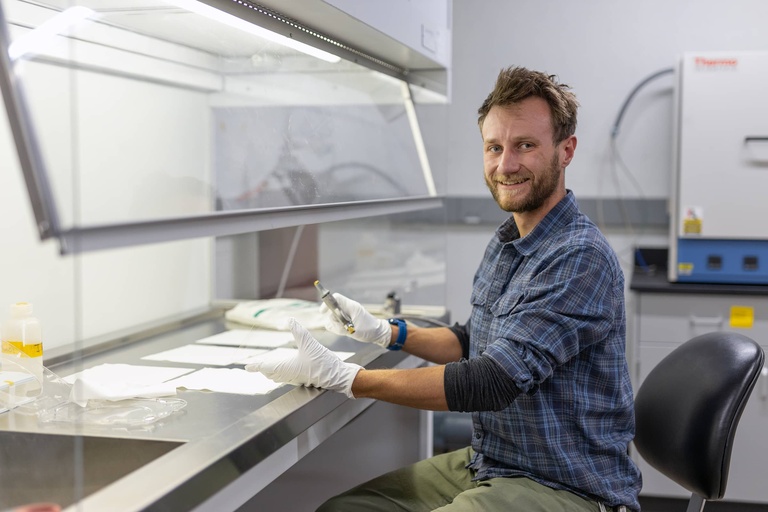
His department also provides the equipment to make mirrors for the X-ray telescope. This requires melting small sheets of glass into the desired shapes, a process known as hot slumping, and coating them with multiple thin films that are reflective to X-ray light. The multi-layer coating mirror design is being developed in collaboration with the NASA Marshall Space Flight Center in Alabama. Payne’s current experiment determines ideal oven parameters to produce the best mirrors, heating plates at about 745°C for 78 hours.
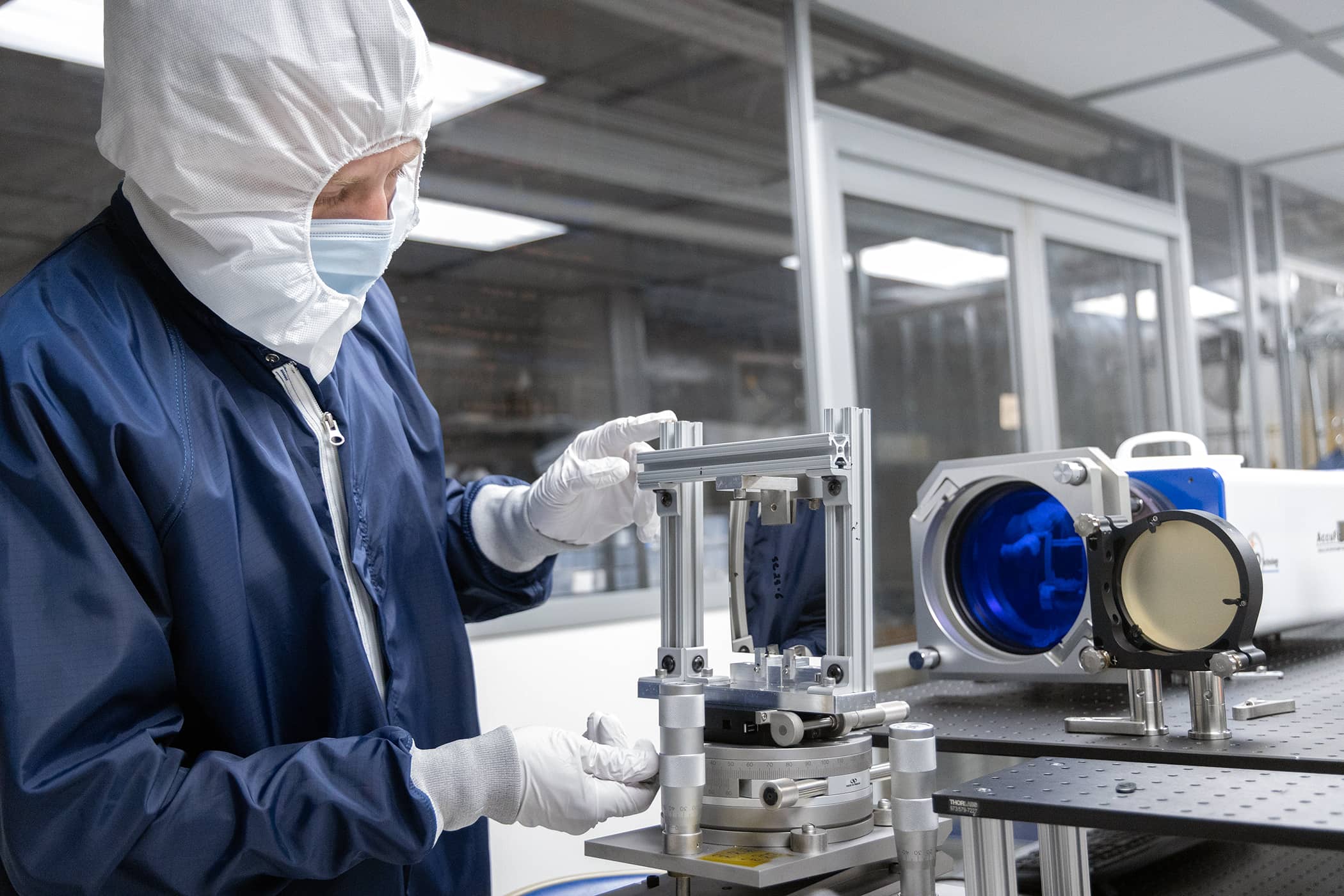
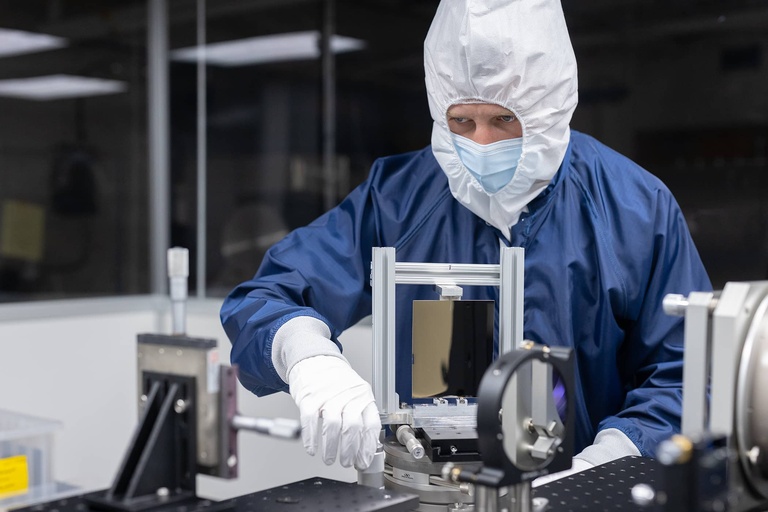
He suits up in a sterile gown to test the focal precision of the finished mirrors in the laboratory’s clean room. Payne estimates a prototype X-ray telescope, consisting of just five small mirrors, to be ready a year from now.
A comprehensive path at Iowa
Payne says the University of Iowa’s history and reputation as an intersection of aerospace and astrophysics makes it the perfect facilitator to his work.
“There's a lot of understanding that experimental physics and astronomy are valuable ways to learn about the world, so I've really appreciated that I can actually use my engineering skills, build things, and get hands on with projects,” he says.
Payne also cites an abundance of role models in the department that have inspired him, noting various professors, members of his cohort, and recent graduates who exemplified the level of initiative and project ownership that he strives for in his own work.