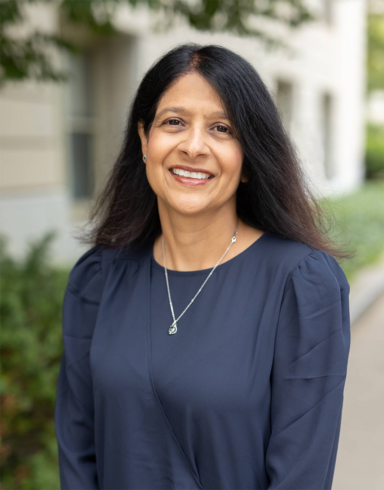
After serving in an interim role since July 2025, Saba Rasheed Ali, PhD, was named dean of the University of Iowa Graduate College and associate provost for graduate and professional education in January. Ali, a faculty member in the College of Education since 2003, has been recognized across campus for both her research and her leadership.
Early career
Ali didn’t imagine herself as a future dean when she entered graduate school, but she imagined a career rooted in service. “I just knew that I wanted to help people, and I was trying to figure out what that looked like.”
Ali, who grew up in Appalachian Mountains region of West Virginia, received a bachelor’s degree in psychology from West Virginia University and a master’s degree in community counseling from the Loyola University in Chicago. She initially began a PhD program at the University of Nebraska, but her doctoral journey was more unique than most graduate students – she entered the transfer portal.
When Ali’s doctoral advisor announced she was leaving, Ali jokingly said she would go with her. That joke quickly turned into reality. She transferred to the University of Oregon after the first year of her program and continued working with her advisor. Although a cross-county move and an adjustment to a new cohort and campus were no small feats, the decision is one she says she would make again.
“Transferring programs was a unique experience. It was a little bit of an adjustment, but it was a really good experience for me,” Ali says. “Sometimes you don’t feel like you know where exactly you fit. It gave me a different perspective on my program and my relationship to it.”
Building rapport
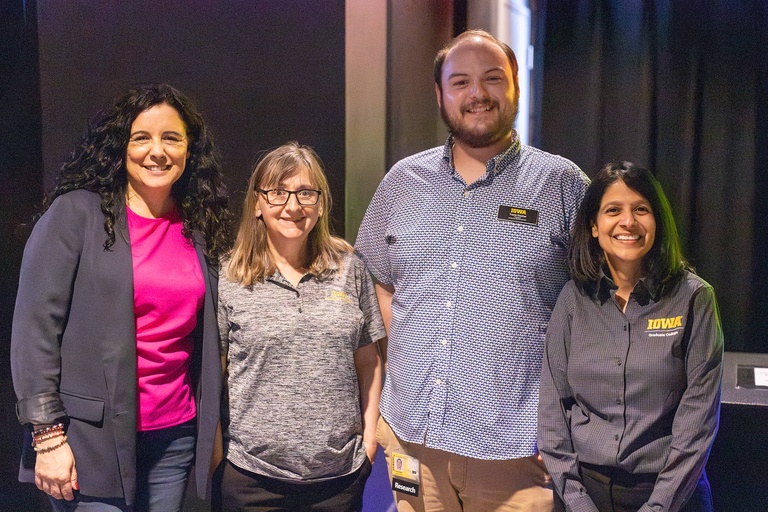
For Ali, one of the key parts of her role as dean is developing relationships with students.
“I’ve realized how important it is to be interacting with graduate students on a regular basis to hear directly from them about their thoughts or ideas for systemic change,” she says.
While at the University of Oregon, Ali and a fellow doctoral student met regularly with the dean to implement some of the programming and student support structures from the University of Nebraska.
“That was probably more unique than I realized. He made time for us. He entertained the idea, supported us, and gave us funding for it. I remember he gave us time at a faculty meeting to present some of our ideas,” she says.
At Iowa, Ali tries to replicate that support. This semester, she attended her first Graduate Student Senate meetings and meets regularly with student leaders. “That’s a really critical place for me to be,” she says. “The listening part is critical. Graduate students are really our best source of information.”
She also emphasizes the importance of supporting the faculty who mentor students. Strong faculty relationships are essential for the student experience. Their guidance shapes how students feel supported by and connected to their programs.
Looking forward
Ali acknowledges that graduate students often identify first with their programs, then their departments, and only distantly with the Graduate College.
Students aren’t always clear what the Graduate College does or what it can offer students. Ali looks forward to improving the college’s visibility and strengthening its partnerships, while leaning into the college’s role as a service unit and telling the college’s story.
“We are here because of the graduate students. We need to make sure that partnerships are strong with students, that we are listening to their concerns, and that we are enhancing programming with the colleges and departments,” she says.
Ali is still developing a guiding vision for the college, but she says she knows that the plan will be student centered and will focus on partnerships and collaboration.
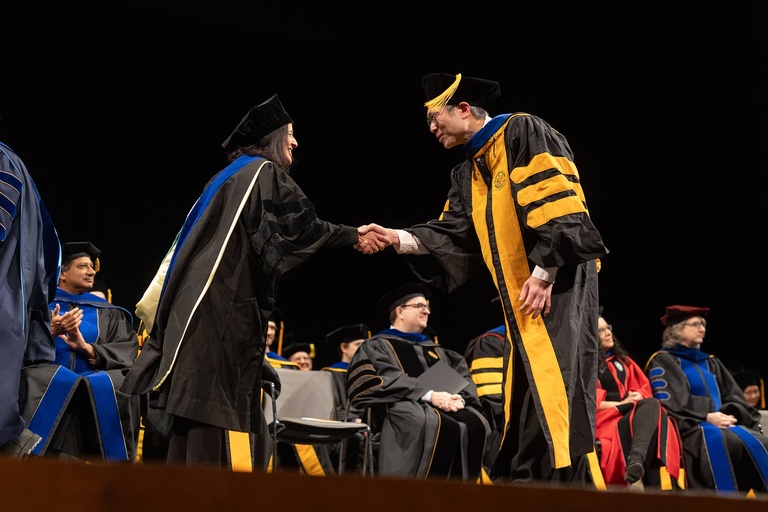
“I believe it must be a shared vision, “she says. “We must have good partnerships across the university to make what we do work.”
Ali describes this year as a listening and learning year. Part of that learning has been getting to know the Graduate College's staff, known socially as the Gilmore Group. Ali has been continuously impressed by group's expertise and dedication to students, noting that their work is foundational to the college's mission.
Moving forward, she plans to develop strategic priorities in collaboration with students, staff, faculty, alumni, and the public.
Ali is candid about the challenges facing graduate education, including shifting public perceptions.
“Number one will always be funding,” she says, pointing to decreases in assistantships, rising expenses, and changes to federal loan programs. She also notes the alignment between graduate education and workforce needs.
Despite the challenges, she is optimistic.
“We’re in a moment of opportunity,” she says. “I believe we can find the opportunity to innovate, especially if we are listening to the voices of students, potential students, and the public.”
Ali’s advice for graduate students is to have an open mind and absorb what the university has to offer.
“If you’re in the humanities, go to the sciences and learn something from them. If you’re in the sciences, go learn something from the humanities. Get outside of your discipline and start learning something from talking to people in other areas,” she says.
When asked what she wants graduate students to know, her answer is simple: “We’re here to serve you, we’re here to help you. We want to partner with you and your programs to enhance your time here.”
The person behind the position
Outside of work, Ali has a passion for reading.
“Tell me a good story,” she says. “I love stories.” She gravitates toward indie and science fiction books, especially ones that push readers to think about societal issues. To Kill a Mockingbird and its prequel, Go Set a Watchman, remain favorites.
She also has a deep connection to her home and family. Ali’s favorite meal is lamb or goat biryani. She says her mother‑in‑law’s recipe is unmatched, and it is also strictly confidential. Her favorite season is fall, inspired by her hometown. A picture of the New River Bridge, just a short drive from where she grew up, amidst colorful fall leaves hangs in her office.