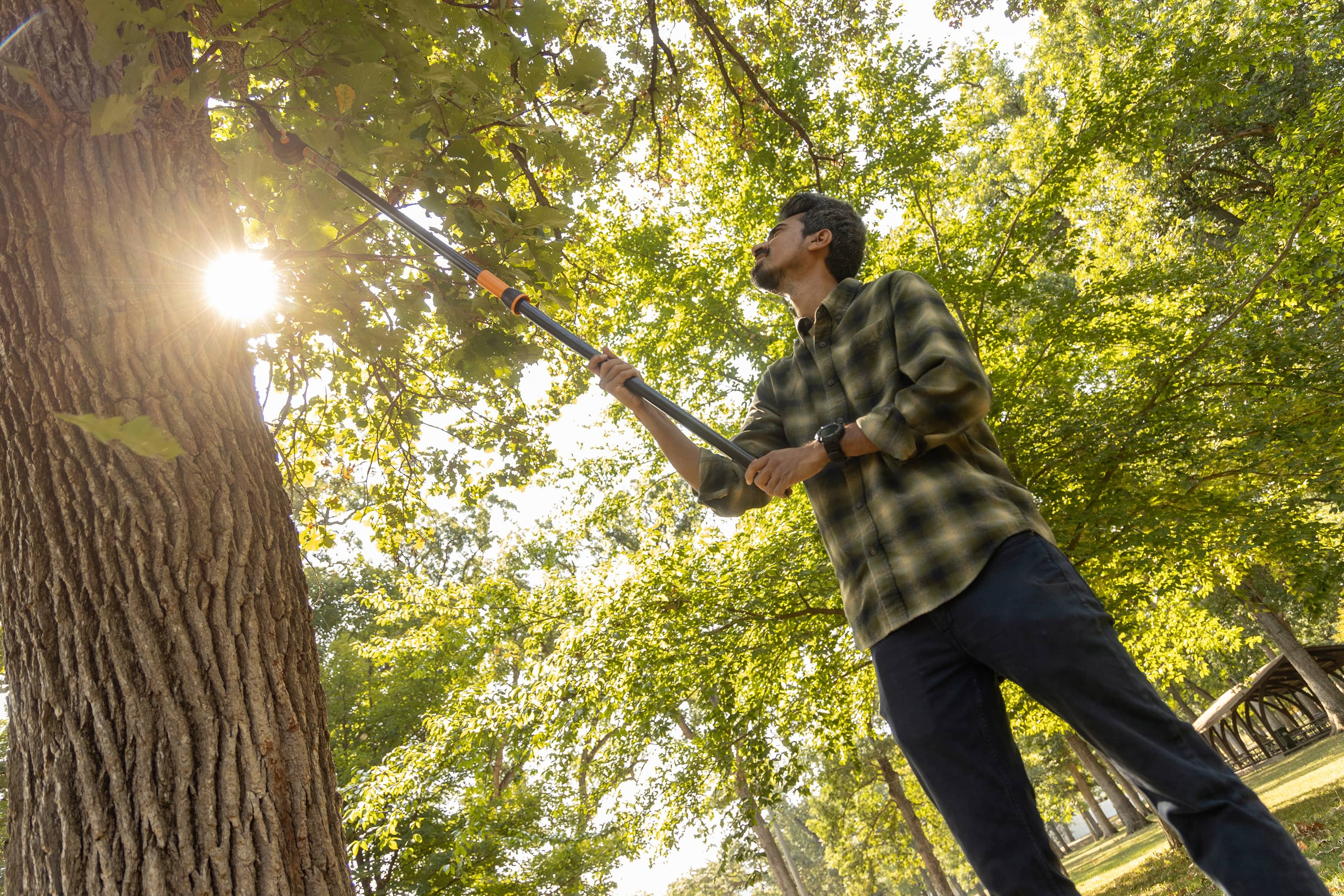
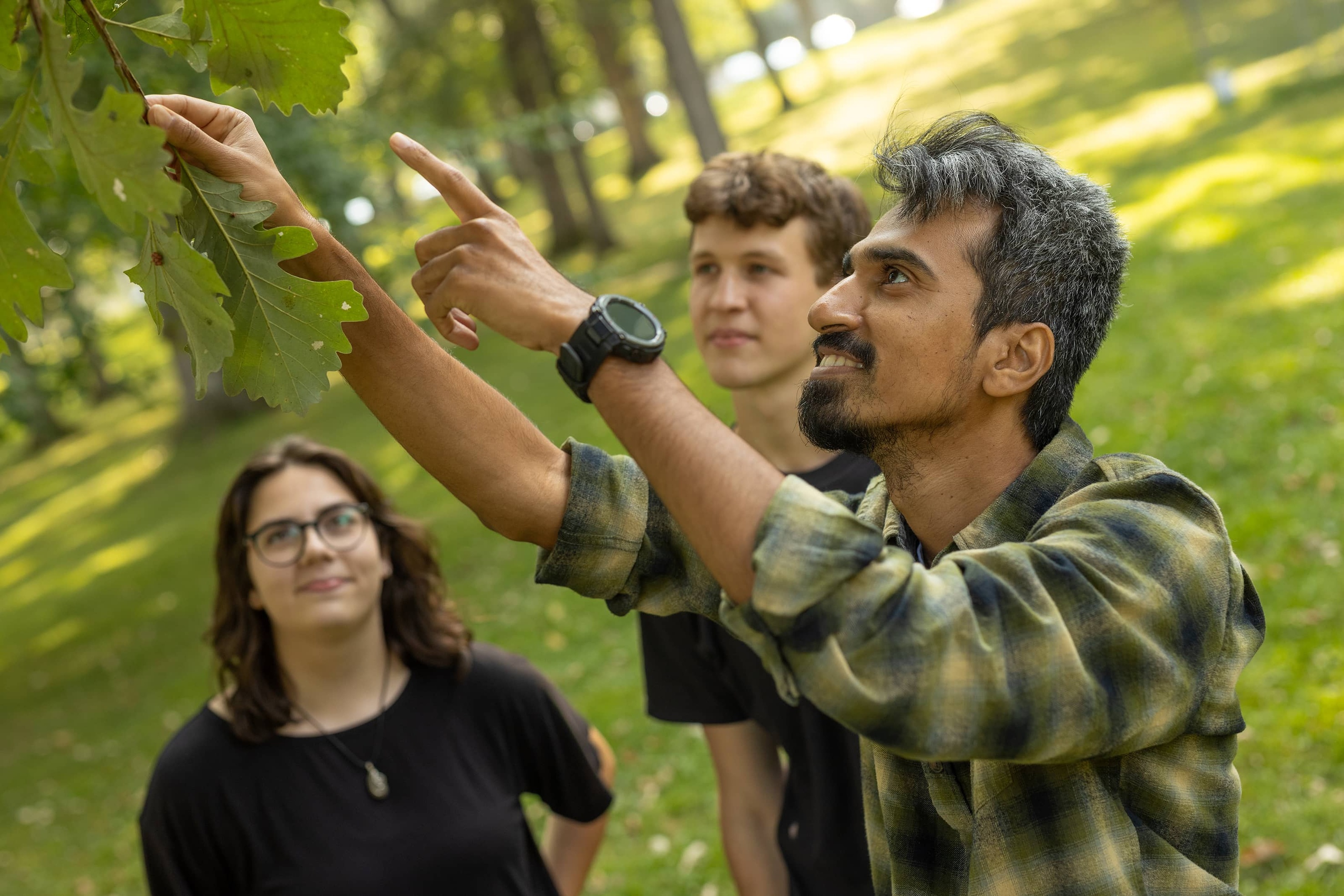
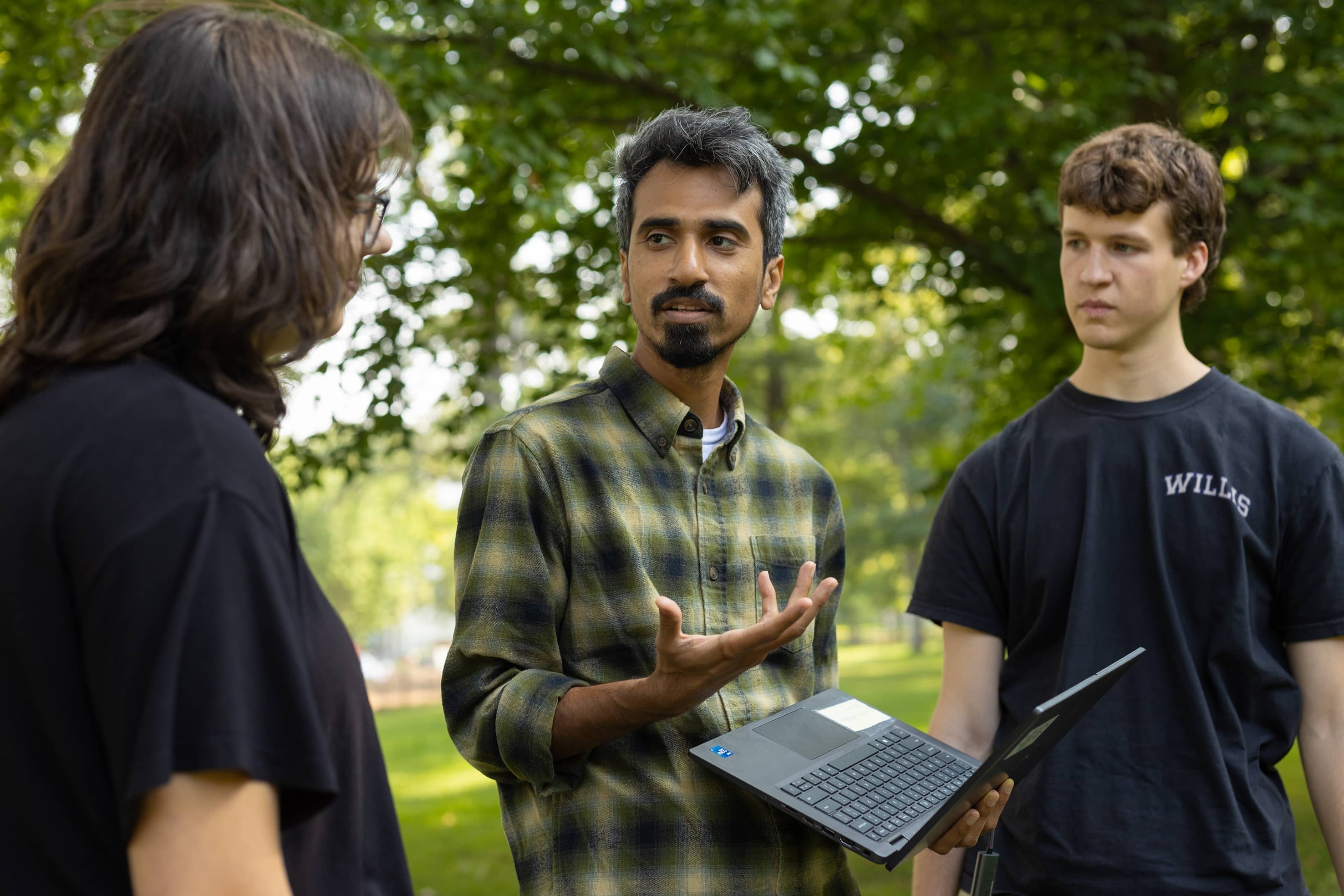
“The bur oak is an icon for Iowa,” says Mainul Islam, a doctoral student in the School of Earth, Environment, and Sustainability (SEES). “If you go to any park or backyard here, you will see at least one bur oak tree.”
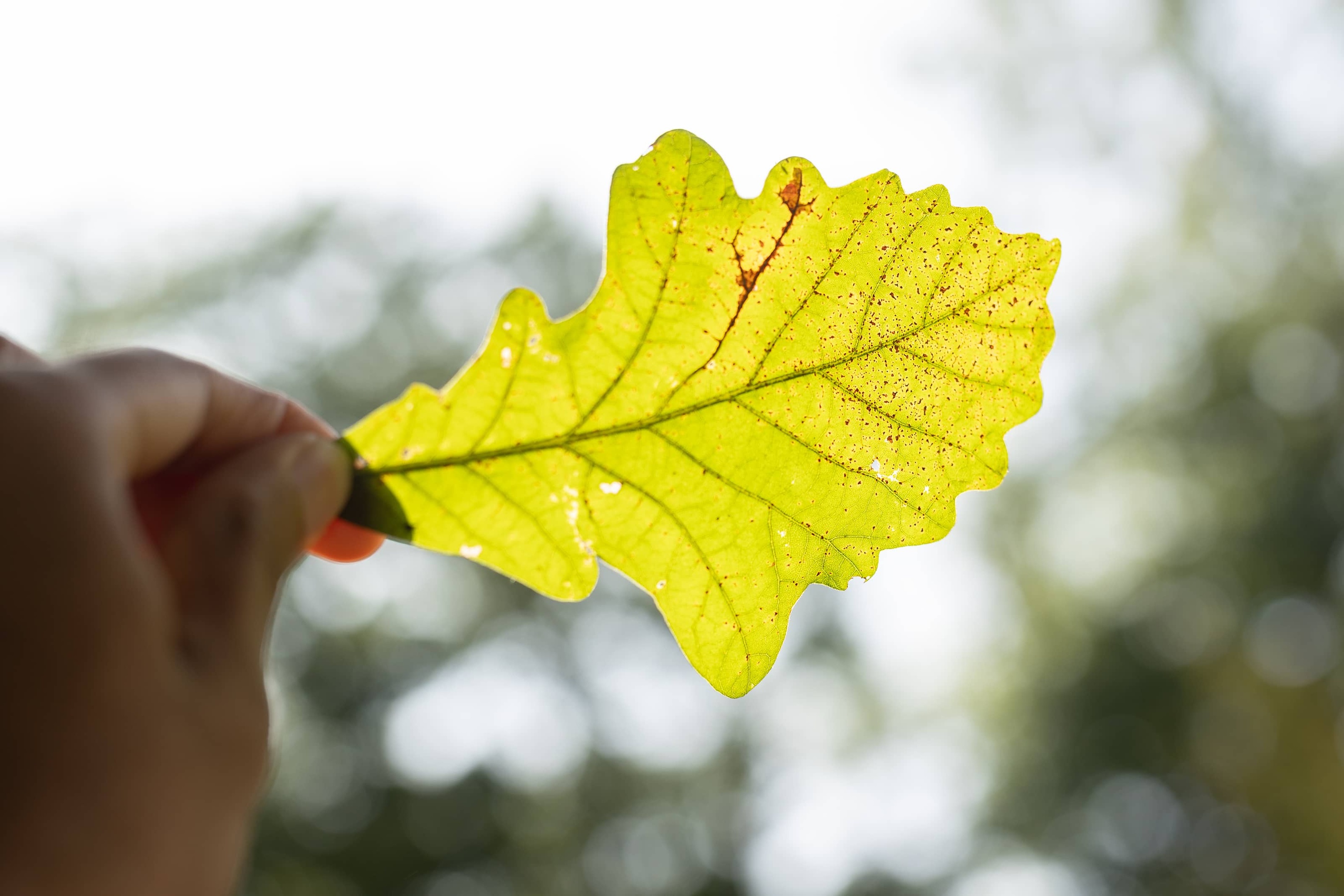
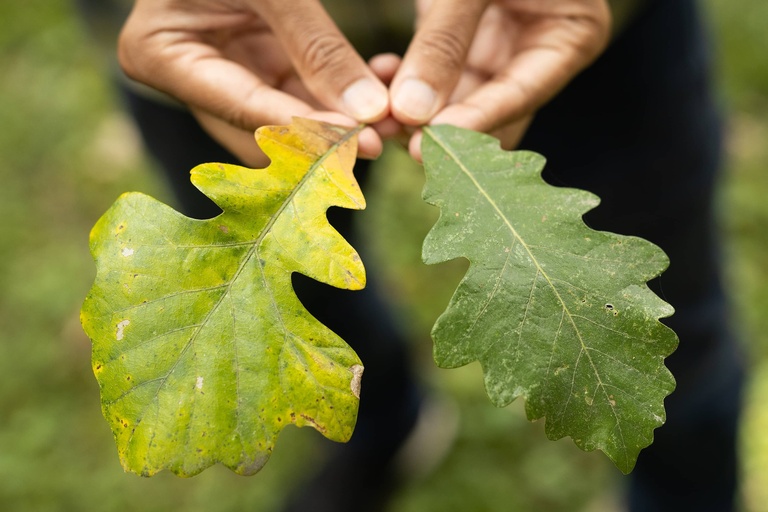
The tree, which was once prolific throughout Iowa and fundamental to the state’s ecosystem, has in recent decades come under threat from a fungal pathogen known as bur oak blight (BOB). Causing deterioration and death to the leaves, over time, the disease can lead to full or partial canopy dieback. In a recent statistic from the Iowa Department of Natural Resources (DNR), based on reports of bur oak blight to the Iowa State Plant Insect and Disease Clinic in 2015, more than 90 counties in Iowa have found bur oak blight.
“We have 99 counties in Iowa, so we can expect that all will be affected soon,” Islam warns. “If we have some plans in place, we can prevent them from severe deterioration.”
According to a 2014 report by the Iowa DNR Bureau of Forestry, the total impact of BOB to Iowa’s forest landowners and wood products businesses is more than $19 million or an annualized loss of close to $770,000 in perpetuity for Iowa’s economy. A decline in bur oak trees can add more risk to Iowa fish and wildlife recreation generated economy of approximately $1.5 billion.
Islam, whose current fieldwork is based in Okoboji, was drawn to studying BOB due to the tree’s cultural and ecological significance to the Midwest. His research uses geospatial remote sensing technologies to measure the scale, severity, and distribution of bur oak blight precisely.
“It would take hundreds of people to go to all trees in Iowa and check them individually. It’s time consuming and not feasible at all,” Islam explains. “That's why you need remote sensing so that you can check the trees and estimate the disease severity and distribution using satellite imagery.”
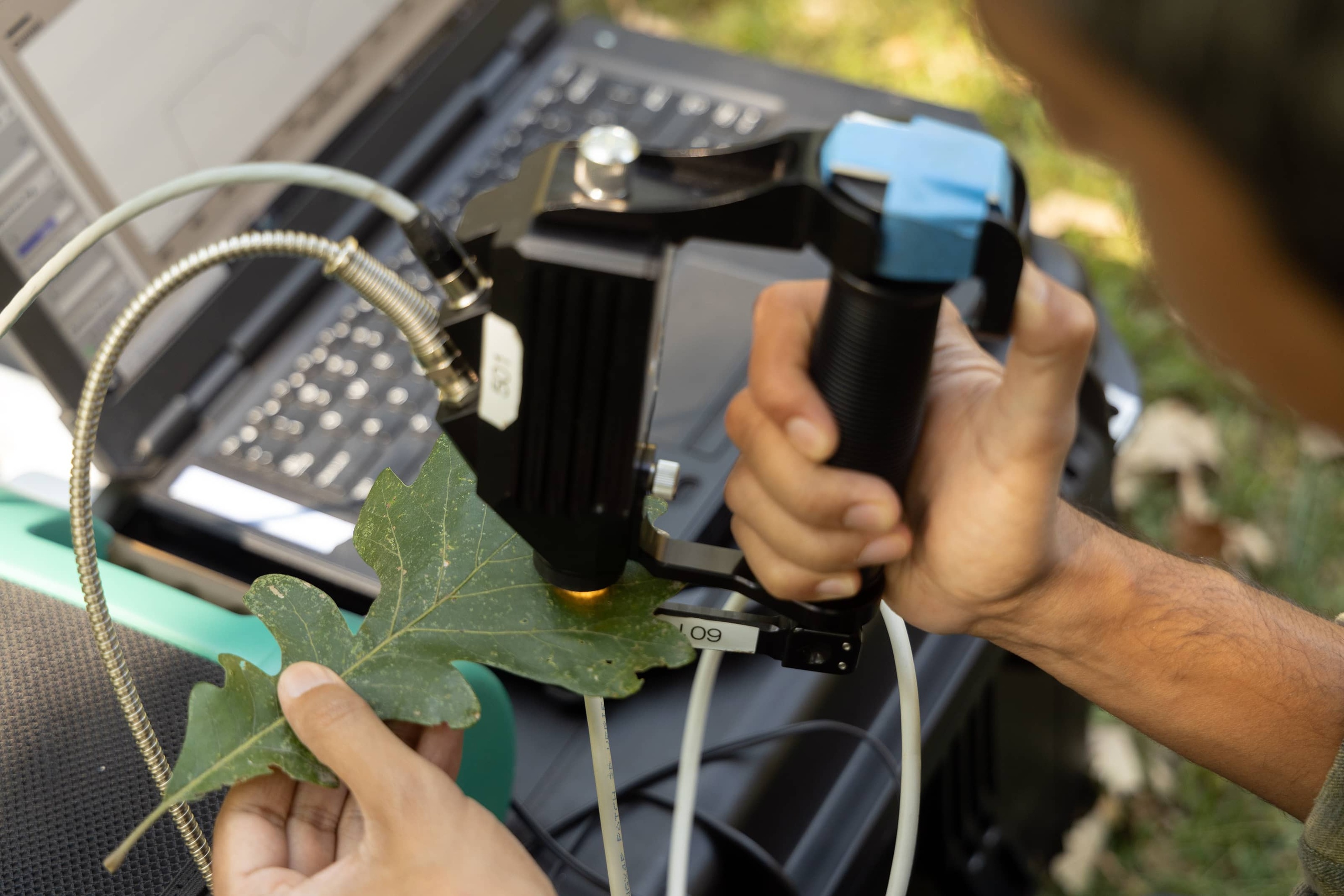
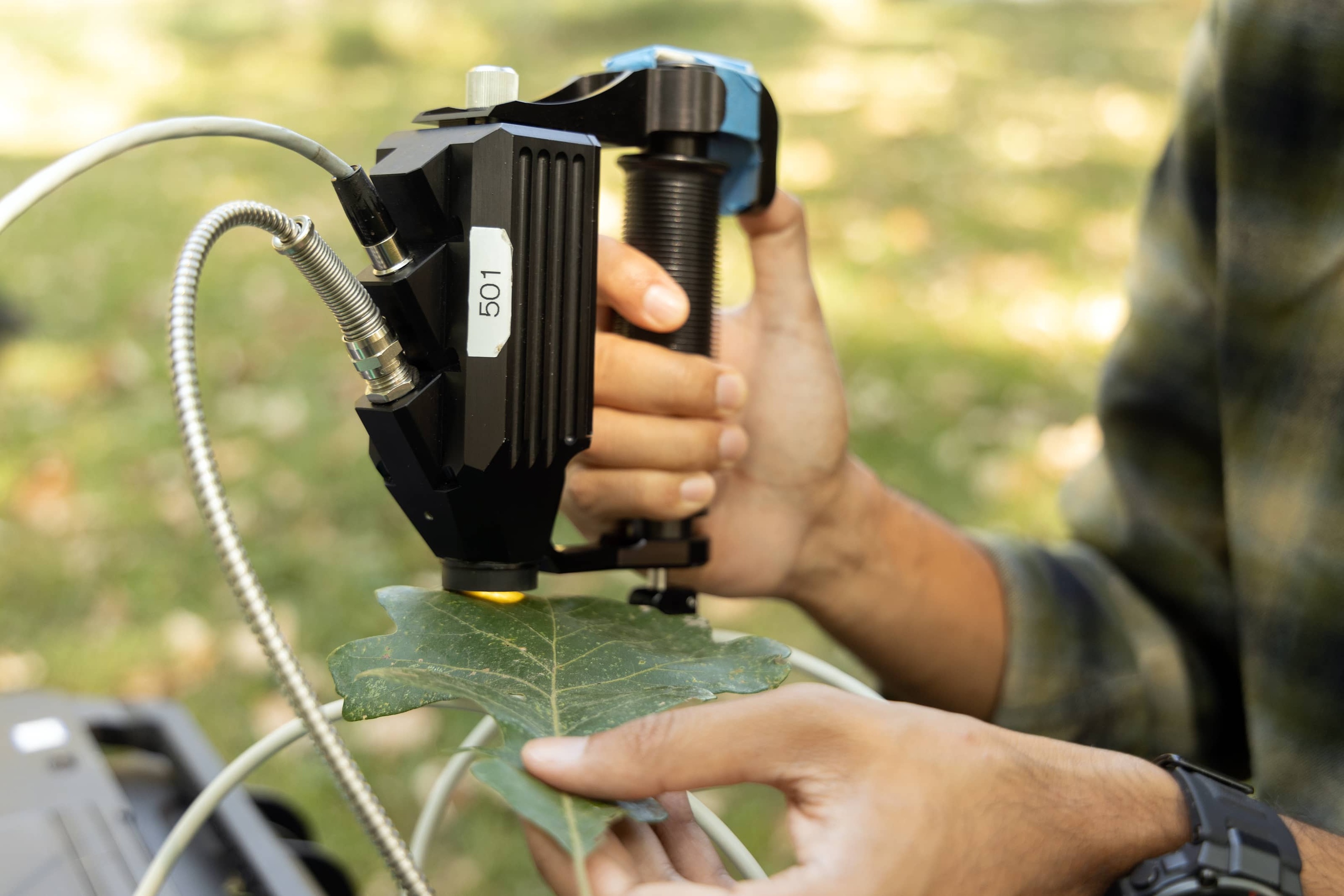
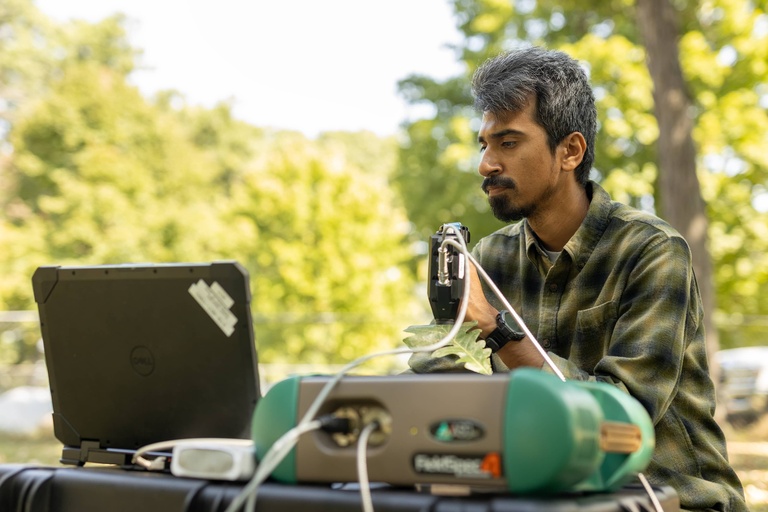
The student primarily relies on leaf spectroscopy and satellite imaging. He uses leaf spectroscopy to measure the range of light reflected by the leaf, which allows him to determine the presence and severity of blight. By using these remote sensing technologies, Islam’s research supports institutional public programs that protect Iowa’s forests.
“The DNR has forest health protection programs. In those programs, the typical objective is to protect the trees, monitor the trees, and notice if there is any disease and how it spreads,” Islam says. “My research gives some support to the existing policies by providing scalable and data-driven solutions using remote sensing technologies.”
Islam is a 2025 Digital Scholarship and Publishing Studio Summer Fellow, which supported data collection for his research this summer, along with the Iowa Lakeside Laboratory and his supervisor, Dr. Susan Meerdink. His work builds on the research of Dr. Thomas C. Harrington, Professor in the College of Agriculture and Life Sciences at Iowa State. Harrington will serve as a committee member for Islam’s thesis.
At the intersection of disciplines
Interdisciplinary research is a cornerstone of the SEES, and it was a primary motivation for Islam to choose UI for graduate school.
“At Iowa, we have different expertise from the faculty like geospatial science experts, ecology experts, and climate experts,” he explains. “So, you can collect knowledge from all the experts in your department.”
Islam’s research involves plant ecology, ecological climatology, plant pathology, and geospatial analysis. By centering location, Islam’s research positions itself in geography studies.
“Because my research is also a part of plant ecology and plant pathology, there could be a question if that is a part of geography,” Islam cites. “However, you have to cover geographical region to analyze the disease and how the disease spreads from location to location. Is it the same for different counties? Location is integral here.”
Communicating specialized knowledge for community betterment
Islam teaches Foundations of GIS (Geographic Information System) Laboratory and hopes to keep teaching after graduating while continuing his research on bur oak blight.
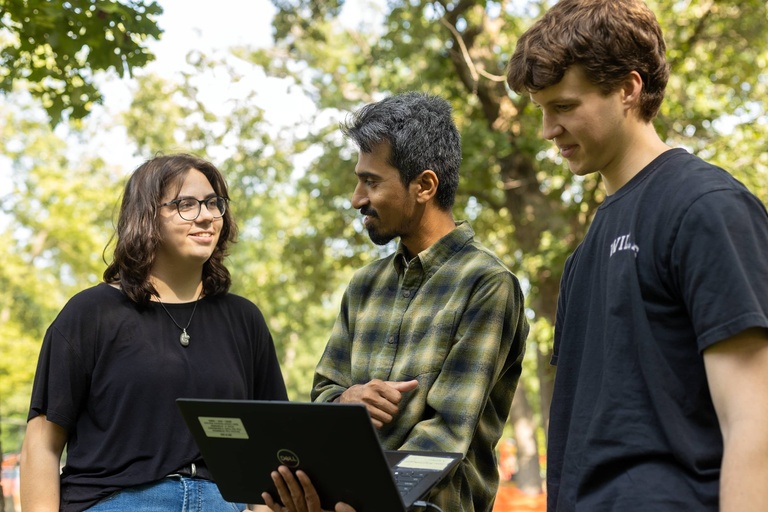
“Graduate school has helped me to develop my science communication,” Islam insists. “We try to communicate our knowledge; we try to develop our knowledge for the community or for the betterment of the community.”
For doctoral students steeped in the minutiae of their field, communicating specialized knowledge can be a learning curve. Attending conferences and teaching emerging researcher undergraduate students can help build this skill.
“I interacted with so many undergraduate students as a teacher,” he cites. “I listened to their problems and their ideas. They were an important part of my graduate life here.”
For Islam, building community is central to graduate life. Reflecting on his past four years in Iowa City, he says he’s grateful for the one he’s found.
“I love Iowa City,” Islam proclaims, citing events like Taste of Iowa City, the university’s soccer facilities, and the Bangladeshi Student Association as highlights of his time here.
“We have a good community here,” Islam says. “We have sports activities and community gatherings, and that's also an important part of graduate life.”