Graduate school comes with a variety of stressors. Between deadlines, research demands, teaching assignments, grant applications, and classes, graduate students’ academic lives can be a balancing act. In addition to these stressors, students face uncertainty about funding, high student loan debt, and concerns about cost of living. While these stressors are faced by many college students across the country, graduate students, professional students, and postdoctoral scholars face a unique and often higher load of academic, financial, and personal responsibilities.
Graduate students’ unique experiences mean they often need tailored support systems. To meet this need, University Counseling Services (UCS) offers a Graduate, Professional, and Postdoctoral Student therapy group. While the group has a long-standing history of being offered intermittently, it has been a consistent offering each semester in recent years due to sustained need and interest.
“Students in this population bring unique life experiences, needs, and scheduling constraints,” says Colette Norris, a staff therapist at UCS. “Being population-specific, it provides participants the opportunity to explore a variety of topics of interest while engaging with others who share experiences related to both personal and professional aspects of this stage of the lifespan.”
By the numbers
According to 2025 National Collegiate Health Assessment data, 75.4% of graduate and professional student respondents at the UI reported moderate or high stress levels in the last thirty days. Among graduate and professional students, anxiety and depression were in the top five ranked academic impediments. Although these metrics highlight the need for mental health support, accessing existing support can be difficult for graduate students.
“Time is often a precious commodity, whether due to an actual lack of availability or the perceived pressure of not having enough of it,” Norris says. “This can make it difficult for students to prioritize and engage with the full range of wellbeing services and supports available to them.”
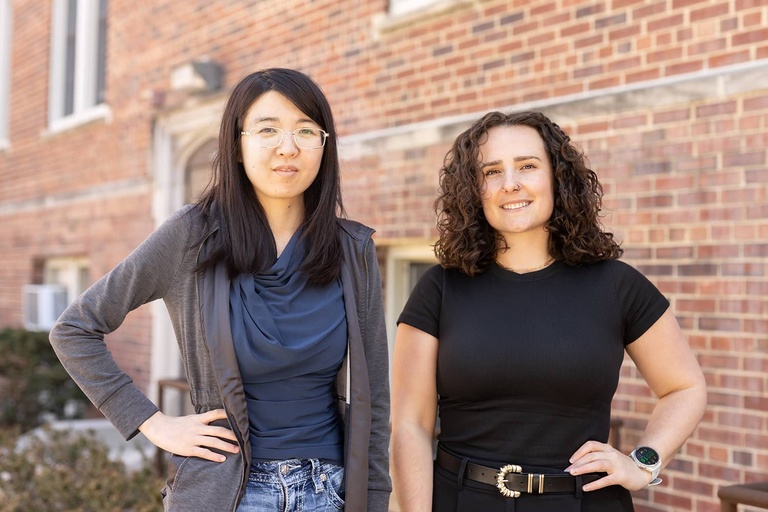
Norris co-facilitates the group alongside Yuchen Liu, a sixth-year Ph.D. student in the counseling psychology program. This semester, they’ve offered the group outside of typical working hours to accommodate more students.
Other common barriers include heavy workloads and competing personal, academic, or professional responsibilities. Students may feel pressure to appear capable or self-sufficient, or they may face mental health stigma. These can create hesitation or blocks for support.
Inside the group: community and care
Norris, who has been with UCS since 2024, has had a career rooted in higher education.
“My career as a mental health provider has been rooted in higher education, a population I truly enjoy serving,” she says.
Liu earned both her bachelor’s and master’s degrees from the University of Minnesota before moving to Iowa City. Her work with UCS is part of the internship required for the degree. Co-facilitating the group been an important part of her development as a clinician.
“As a graduate student myself, I resonate with what group members share. At the same time, my experiences a graduate student inform my work as a co-facilitator and help me better understand their struggles and build connections,” Liu says.
Each week, Norris and Liu lead the group through discussions shaped by the members themselves, creating a space for students to connect. Frequently, the group discusses perfectionism, imposter syndrome, relationship concerns, and stress management, among other topics that reflect the realities of graduate life.
“While graduate, professional, and postdoctoral students may also access and benefit from other general group spaces, this group offers shared areas of overlap that can strengthen connection and collective experience for those seeking it,” says Norris.
“Group members also serve as a valuable source of support for one another. This creates opportunities for deeper exploration, peer connection, and meaningful feedback related to both strengths and blind spots,” the Norris says.
The connection piece is why the group remains popular. In their feedback, students have shared how the group makes them feel less alone in their struggles and that they value hearing how their peers cope with their challenges.
For graduate students, the group offers a steady point of connection. It doesn’t erase the challenges of graduate school, but it gives students a place to face them together, and that sense of community can make all the difference.
For information about the Graduate, Professional, and Postdoctoral Student therapy group and other mental health services, visit University Counseling Service’s website.