Depression is a disorder characterized by persistent feelings of sadness, loss of interest in rewarding activities, and low energy, and it is currently one of the fastest growing mental health disorders in the United States.
Though the disorder is increasingly recognized and has a wide range of treatment options, nearly 1 in 3 patients who seek treatment for depression show no meaningful improvement after two or more attempted courses of treatment.
Maddie Mocchi, PhD, was selected as a 2026 Dare to Discover honoree in acknowledgement of her postdoctoral work studying how to better diagnose, track, and treat depression to improve long-term outcomes for those suffering from the disorder.
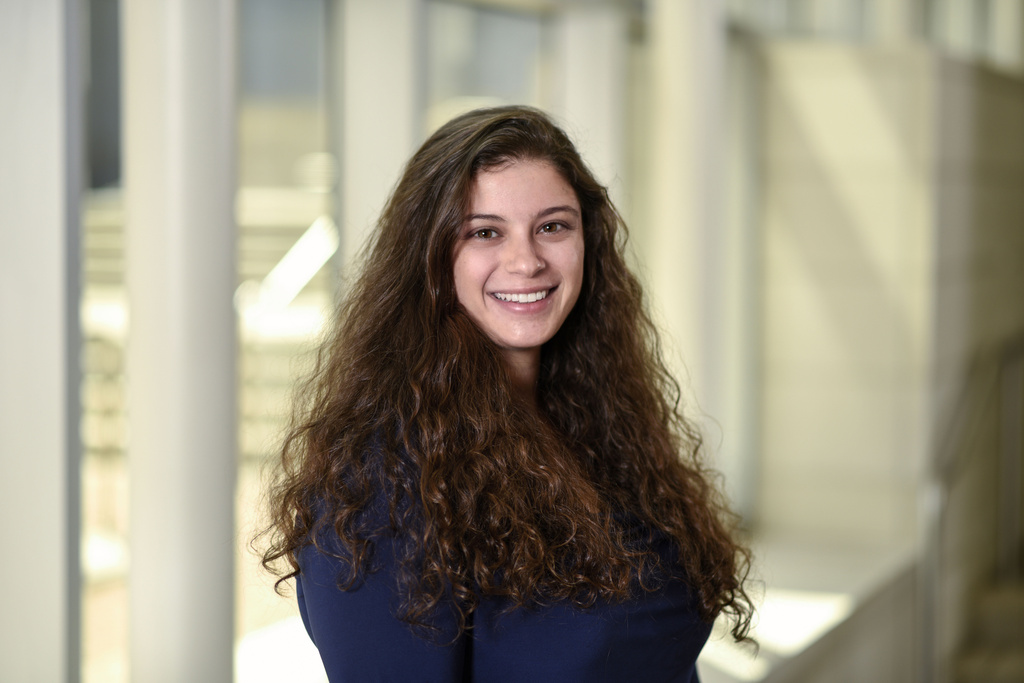
The native of Cary, Ill., says one of the biggest challenges in depression management is the lack of an objective biological marker (proteins, genes, brain signals) of depression severity, which would aid in identifying which treatments will work best for everyone by providing a biological readout that may change on a faster time frame than a patient’s subjective changes in mood.
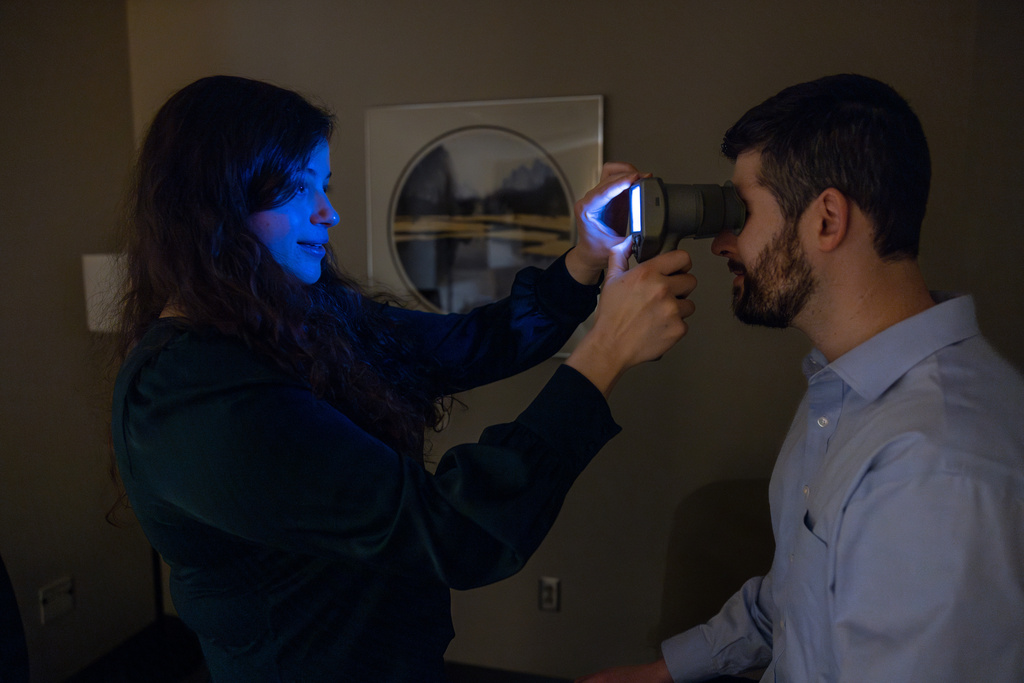
As an INSPIRE postdoctoral fellow in the Department of Psychiatry in the Carver College of Medicine, her projects aim to identify this kind of biomarker by examining how rapid fluctuations in pupil size reflect activity in the emotion-processing regions of the brain, such as the anterior cingulate cortex and the amygdala. By identifying these measurable signals from the body, she aims to help personalize treatment for mood disorders like depression.
An entrepreneurial researcher
Mocchi’s work bridges innovative neuroscience and clinical care, and she is excited about how she may be able to turn these basic research findings into a product that could help patients.
She is receiving training in this area through an engineering device design course and the University of Iowa Ventures Leadership Fellowship.
“As part of the leadership fellowship, I have learned an incredible amount about how to translate my basic research findings into tangible, useful products that could help others,” Mocchi says.
In her engineering device design course, Mocchi strives to complete a design for a custom pupillometer that could be used for tracking mental health-associated physiology over time both inside and outside of the clinic.
Returning to Iowa, looking ahead
Mocchi began her educational journey in Iowa while earning her BA in Psychology from Grinnell College, and later moved to Houston, Texas, to pursue further training in neuroscience at the Baylor College of Medicine. There, she worked with brain recordings from human neurosurgical patients to understand how brain state could better track and treat mood disorders like depression.
After graduating with her PhD in May 2025, Mocchi returned to the state of Iowa as a postdoctoral fellow in the lab of Nicholas Trapp, an assistant professor of psychiatry, studying neurostimulation therapies as a treatment of depression.
“I’m confident she (Mocchi) has a bright future at the bleeding edge of integrating neurotechnology with mental healthcare. We need more researchers like her.” - Nicholas Trapp, UI assistant professor, psychiatry
Professor Trapp recommended that Mocchi apply for an INSPIRE Postdoctoral Fellowship through the Department of Psychiatry. INSPIRE is a two-year fellowship program, funded by the National Institute of Mental Health, designed to train fellows who are dedicated to a career in neuroscience research.
“I was very fortunate that some of my graduate work resulted in a provisional patent for a neural biomarker of tracking depression severity,” Mocchi says. “After visiting during interviews for the INSPIRE Fellowship, I knew the University of Iowa was the ideal environment to further elaborate on these findings.”
Mocchi received the INSPIRE Fellowship and is enjoying her first year in Trapp’s lab.
“I feel like I mesh well with people in the lab group, including my advisor, who's amazing and probably the best advisor I've ever had,” Mocchi says.
Professor Trapp loves having Mocchi in his lab.
“Maddie has been an amazing asset to our lab’s science and our lab culture – her passion for the work is palpable, and her creative energy has really invigorated our team,” Trapp says. “It has been a joy seeing her grow and mature."