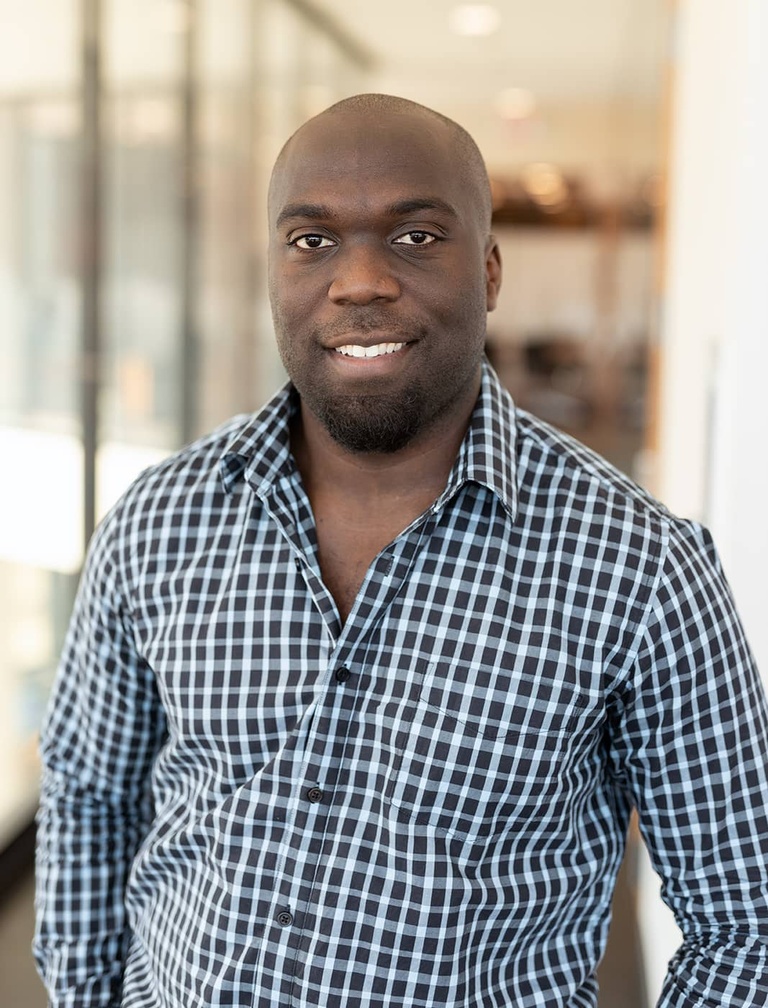
A 2026 recipient of the University of Iowa’s Graduate Research Excellence Award, Williams recently answered a few questions about his path from undergraduate training in business and an MBA to doctoral training in the University of Iowa College of Public Health.
What is your program of study?
Doctoral program in Health Services and Policy, College of Public Health
Tell us about your path to a graduate program at the University of Iowa.
My path to this graduate program has been shaped by both academic training and a growing interest in how health systems and various policies affect patient outcomes. I completed my undergraduate degree in business administration at the University of South Dakota, where I developed an interest in logistics, organizational systems, and management.
After graduating, I entered the workforce and later pursued an MBA with a specialization in health services administration. That experience introduced me to the complexity of health care delivery and policy. During my graduate training, I became increasingly interested in understanding how health systems and policies shape access to care and influence health outcomes, particularly for underserved populations. That interest ultimately led me to pursue doctoral training in health services and policy at the University of Iowa.
At Iowa, I have been able to combine my interests in policy analysis, health care delivery, and population health to study the systemic and structural factors that influence health outcomes.
Why did you decide to study this field at Iowa?
The University of Iowa’s College of Public Health offered a unique opportunity to study health policy and health systems in a collaborative environment. I was drawn to faculty and peers whose research focused on rural health, health disparities, and health equity.
Working with mentors in the Department of Health Management and Policy and across the college has allowed me to explore how health care systems and policies influence cancer prevention, screening, and treatment outcomes. Iowa’s interdisciplinary environment has also made it possible to collaborate across public health and community health programs, strengthening the scope and impact of my work.
Tell us about your research. What accomplishments are you most proud of?
My research examines disparities in cancer prevention, detection, and treatment, with a particular focus on prostate cancer outcomes among Black populations. I use both quantitative and qualitative methods to understand how health policies, health care systems, and patient experiences shape these outcomes.
One area of my work examines how national screening recommendations affect prostate cancer screening across different communities. Another project focuses on differences in cancer treatment and timeliness of care among patients diagnosed with prostate cancer. In addition to quantitative analyses using national- and state-level data sets, I have led qualitative research exploring barriers to cancer care experienced by Black communities in Iowa.
This work involved collaborating with community leaders and conducting interviews to better understand how structural barriers and community resources shape access to care. I am most proud of the collaborative nature of this research, which has resulted in peer-reviewed publications and conference presentations. I have been fortunate to work alongside outstanding mentors and research teams throughout this process.
What are your career aspirations?
My long-term goal is to conduct research that informs health policy and improves equity in health care delivery. I hope to pursue a collaborative research career working with social scientists, health care organizations, and policymakers. Ultimately, I want my work to contribute to policies and practices that reduce disparities in cancer outcomes and improve access to high-quality care.
What advice would you give to others who are considering your field?
Health services research sits at the intersection of policy, health care delivery, and population health. For students interested in this field, my advice is to stay curious about how health care systems function and how policies affect real people.
Some of the most important research questions come from noticing gaps, asking why systems operate the way they do, and being willing to explore topics that genuinely interest you. Collaboration is also essential.
Health systems are complex, and no single discipline has all the answers. The most meaningful insights often emerge when researchers work across fields and incorporate varied perspectives—from quantitative data and policy analysis to community voices and lived experiences.
Mentor name and department
Whitney Zahnd, assistant professor of health management and policy, College of Public Health
Hometown
Hanover, Jamaica