For many graduate students, professional development often means attending conferences, practicing presentation skills, or learning how to explain research to a general audience. At Iowa, students have discovered that leadership is another way to build skills outside of the lab or lecture. Involvement in student organizations can foster skills like advocacy, community building, and organizing.
We sat down with three current student leaders to learn more about why they chose to get involved, which organization they are in, and how their experiences have contributed to their education beyond the classroom.
Building Community
Fascha Aryasa, a master’s student in business analytics, was drawn to student organizations that fostered a sense of belonging at the university. As an international student, she sought out groups that would connect her with peers facing similar experiences and would give her the opportunity to make the university more welcoming and supportive for all students.
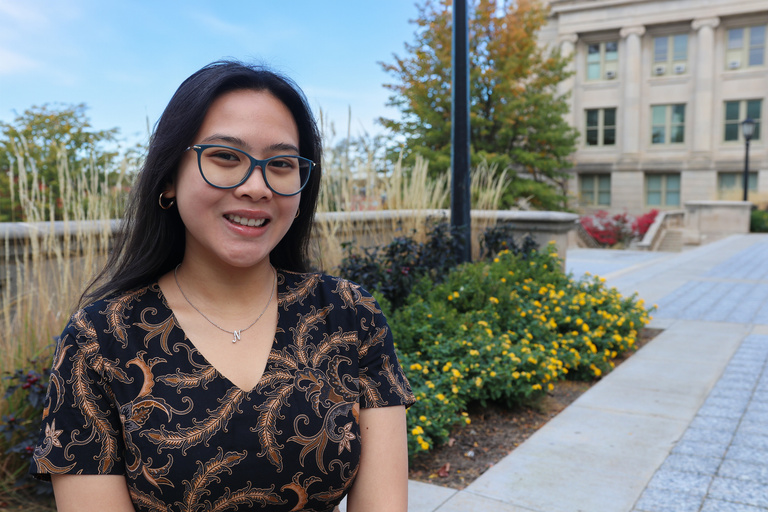
“I stepped into leadership because I saw areas where my voice, lived experience, and initiative could make a meaningful impact. Whether advocating for international students, improving communication systems, or fostering community, leadership allowed me to turn my ideas into action,” she says.
Aryasa completed her undergraduate studies at Iowa in 2025 before staying to pursue her master's degree. Her current involvements include serving as the Communication Director for Graduate and Professional Student Government (GPSG), International Student Advisory Board (ISAB), and PERMIAS Iowa, an organization for Indonesian students. These organizations have given her the opportunity to grow her skills in strategic communication and storytelling, event planning, and working within a university structure, which not only broadened her perspectives but also shaped her confidence.
Aryasa’s favorite memory reflects her deep commitment to fostering a sense of belonging. She fondly remembers incoming international students telling her that they felt reassured seeing another international student in leadership at an ISAB welcome event. “Moments like those remind me why this work matters,” she reflects.
The Room Where It Happens
Fifth-year doctoral student Travis Fischer’s involvement started within his own program. After completing his undergraduate studies at the University of New Hampshire, Fischer chose to pursue his PhD in biomedical science, with a focus on cancer biology. For him, being involved is an opportunity to grow and mature in the interpersonal aspects of your career.
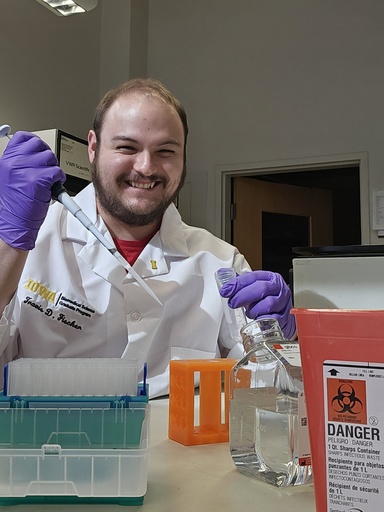
“As a scientist, your job isn’t going to be in laboratory equipment sales. You’re going to be working with a team. You’re going to have collaborators. You’re going to be writing grants, going to academic meetings, presenting your work, and networking. For me, part of getting involved was making sure I was more well-rounded than just an academic. You need to be able to explain why what you’re doing is important and why it will make a difference,” he says.
Fischer’s current campus involvements include serving as the President for Graduate Student Senate (GSS), the Association for Multicultural Scientists (AMS), GPSG, and a member of the Advisory Committee for the Office of Cancer Career Enhancement and Teaching (OCCET) in the Holden Comprehensive Care Center. Previously, he has also been a peer advisory leader for the Biomedical Sciences Program (BSP), co-chair of the student social committee in the cancer biology subprogram, and chair of the invited speaker program for cancer biology. Fischer’s involvement also extends beyond campus to national societies for his discipline.
“Decisions are made by those who show up,” he says, quoting The West Wing. For Fischer, this has become a mantra – a reminder to address concerns and be a resource for others. One of his favorite memories was passing a resolution on parking changes in GSS, an issue that students across campus supported.
As a leader, he prioritizes understanding different viewpoints about an issue and encouraging others to share their voices. “We need people to have different experiences and who view things through different lenses than everyone else. You can speak up and be the voice of change.”
Finding Balance
Cecilia Botwe, a third-year doctoral student in higher education and student affairs, has always loved leadership. Originally from Ghana, Botwe completed her undergraduate and master's degrees at the University of Cape Coast. For her, leadership is about being an advocate for those around her and finding a supportive community.
“If I have the experience and I have the voice and I can advocate for the success of students, why not go out there?” she reflects. “Why not also experience it firsthand? Why not relate to your own colleagues, network with them, and support them practically?” Her involvement also reflects her research interest in understanding international student success across universities.
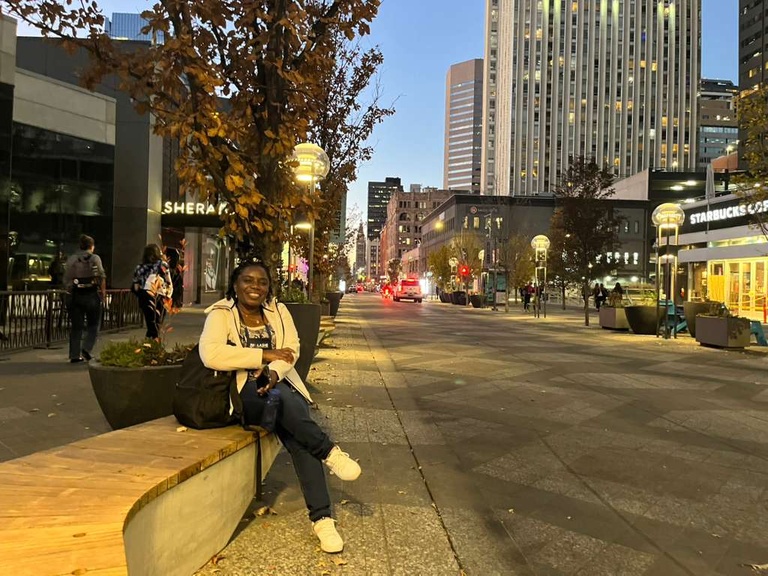
Bowte’s current involvements include serving as GPSG’s International Affairs Director, GSS, and ISAB. She became involved at Iowa after a friend pushed her to join things that aligned with her passions. “She sees the way I am, and how I’m passionate about the work I do. She’s been encouraging me to get on board and go out and do this kind of work.”
For Botwe, her leadership experiences have contributed to her personal growth, including her ability to manage people from different backgrounds, direct a committee, and foster a supportive community. Like Fischer, she mentioned that in the workplace, these skills are highly valuable. She also emphasizes how being involved has helped her balance multiple projects and develop a growth mentality.
“Getting that balance for me is important. It provides a break from academics while still building valuable skills. It enriches your academic journey, your graduate journey, in ways that coursework alone cannot. Getting involved helps you meet peers and faculty and opens opportunities you wouldn’t find alone,” she reflects.
A Collective Impact
Aryasa, Fischer, and Botwe all have a shared passion and appreciation for leadership. Their experiences highlight that being involved and taking on leadership positions can help graduate students develop skills outside of the classroom.
“My involvement has been one of the most meaningful parts of my time at Iowa. It has strengthened my sense of belonging, expanded my network across campus, and given me a deeper understanding of how the university operates. It complements my academic experience by allowing me to apply leadership, communication, and problem-solving skills in real-world contexts,” Aryasa shares.
All three encourage other students to find something they are passionate about and explore ways to be involved. Botwe adds: “Graduate school can feel lonely, but leadership allows you to connect, to be a part of a community, and to support others in that community.”