Each year, the Graduate College presents two D.C. Spriestersbach Dissertation Prizes for excellence in doctoral research. These awards commemorate the innovative research of graduate students and their impact on their respective fields.
To be eligible, students must have received their doctorate or completed all doctoral degree requirements. The prize is given to students in two of four disciplinary areas.
For the 2025 competition, the two disciplines were Humanities and Fine Arts and Biological and Life Sciences. The 2025 D.C Spriestersbach Dissertation prize recipients were Katelyn Joyal and Myat Thinzar Aung.
Visualizing the Villa
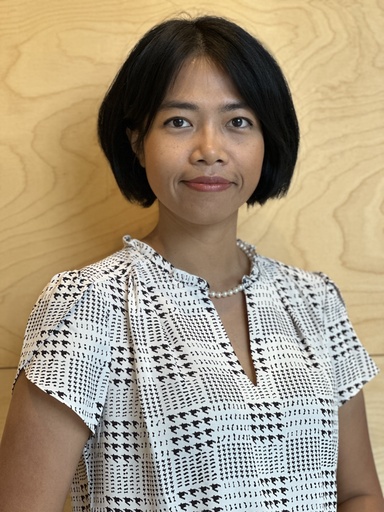
Originally from Burma, Myanmar, Aung completed her undergraduate degree at Ripon College in Wisconsin. She initially came to Iowa for her master’s degree and decided she wanted to stay for her PhD as well. For Aung, Iowa’s welcoming faculty and students made her feel right at home.
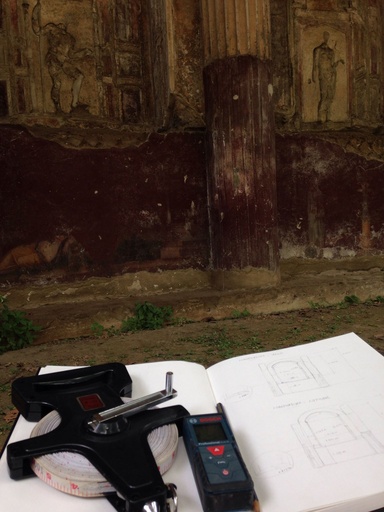
As an Art History student, Aung’s dissertation research explored sensory experiences in ancient Roman villas. Her interdisciplinary work builds on the field’s understanding of how art, architecture, and nature shaped human experiences.
Aung also completed a certificate in public digital humanities during her master's work, and she used her knowledge in digital modeling to inform her studies. Looking at sites from the 2nd century BCE to the 2nd century CE, Aung used digital modeling to recreate how sensory elements like light and water may have interacted with art and architecture.
“My research helps make ancient spaces more accessible and relatable. It invites people to imagine what it felt like to move through these spaces,” Aung describes. “It’s about connecting the modern audience with the human side of history and showing how ancient design still resonates with how we experience the world today.”
Reducing the Risk
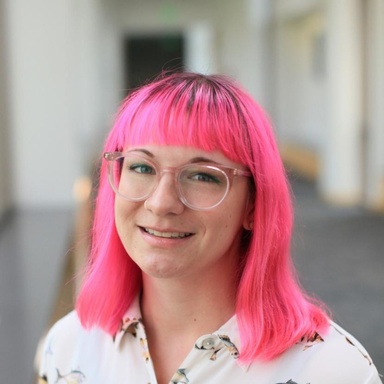
Similar to Aung, Joyal knew that Iowa was the place for her when she arrived on campus. After completing her undergraduate degree at Mount Holyoke College in Massachusetts, almost every graduate school to which she applied was on the East Coast. When she visited Iowa, she was struck by the collaborative and supportive environment.
As a neuroscience student, Joyal's dissertation research focused on epilepsy, specifically Sudden Unexpected Death in Epilepsy or SUDEP. Over 3,000 people pass away annually from SUDEP.
“People may have hundreds or thousands of seizures in their lifetime, and maybe only the fifteenth hundredth seizure is the one that’s fatal. What made that one seizure different from all of the others?” she asked.
Joyal’s work focused on a couple of specific risk factors, including breathing, sleep, and serotonin. By analyzing the factors that may increase mortality in epileptic individuals, Joyal’s research aims to understand who is most at risk for SUDEP and inform interventions that reduce that risk.
“If we can find the source, down the line, that could help clinicians come up with therapies. Giving them this information is ultimately finding therapies or tests to see who is most at risk,” she says.
Impact and Legacy
For both Joyal and Aung, the prizes have been a source of validation for the countless hours of work they’ve poured into their dissertations.
Like many women in science fields, Joyal had experienced Imposter Syndrome during her PhD. The support she received during the nomination process for the dissertation prize inspired her.
“It was touching. It changed the way I thought about myself as a scientist a little bit, too,” she said.
Aung was working on her dissertation as Myanmar was entering a period of armed conflict and civil unrest. Travel restrictions in the area prevented her from returning home or completing additional field research. The dissertation was a way to commemorate the work she had completed during the rough period.
“There were moments when I questioned whether pursuing a PhD was worth it, but thanks to my supportive advisor and department, I was able to keep going,” Aung says. “Winning the prize felt validating because I was recognized for the hard work I put in during a difficult time. It gave me momentum to continue building my career.”
Aung is now a Professor of Instruction in Art History and Criticism at the University of Texas at San Antonio and is working on a book proposal. Joyal is a postdoc at Tufts University, where she is still studying SUDEP in her new lab. Although both students have since left Iowa, they are continuing to uphold the Hawkeye legacy across the country.