This summer, 109 advanced doctoral candidates are participating in the Graduate College Summer Fellowship Program, allowing them to focus on dissertation research without the competing demands of summer employment.
"This program, which was established by the college’s former dean, is designed to help reduce time to degree by allowing students to devote the summer to intensive research and dissertation writing," says Saba Ali, associate provost for graduate and professional education and dean of the Graduate College. “It is one of several funding initiatives in the Graduate College that that support doctoral and masters’ students as they pursue original work and present at conferences.”
Meet four students whose fellowship-supported research is deepening our understanding of neuroscience, dual language learning, product delivery optimization, and the rise of the gig economy.
Farima Salamian

Farima Salamian, a PhD candidate in Business Analytics in the Tippie College of Business, studies how to optimize last-mile delivery, the final step of getting products to customers.
The last mile often is one of the most expensive and difficult parts of the supply chain. In dense urban areas, delivery drivers can lose significant time searching for parking or walking long distances from parking spots to customers, which makes deliveries slower and more costly.
Salamian’s research examines how real-time parking availability information can be used to improve delivery routing decisions, helping companies complete deliveries in less time. The ultimate goal is to help delivery providers reduce costs while also improving the customer experience through faster and more reliable service.
“This summer fellowship is very meaningful to me because it gives me dedicated time to focus fully on my research with fewer competing responsibilities. Having this protected time means I can make real, concentrated progress, including completing the first chapter of my dissertation and beginning to develop the direction of my second paper. More broadly, I see this fellowship as a recognition of the value of my research.”
Salamian’s dissertation advisor is Ann Campbell, Clement T. and Sylvia H. Hanson Family Chair, Department of Business Analytics in the Tippie College of Business. She plans to complete her degree in May 2028.
Onae Parker
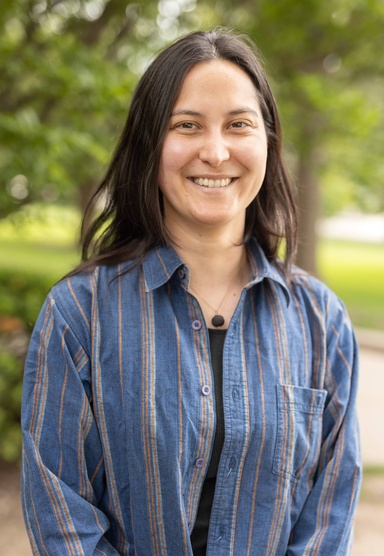
Onae Parker, a PhD candidate in Linguistics in the Department of Languages, Linguistics, Literatures, and Cultures in the College of Liberal Arts and Sciences (CLAS), became interested in language as a child while growing up in rural Iowa and learning her mother’s native language, Japanese.
Her dissertation focuses on heritage bilinguals of Japanese—those who learn Japanese in an informal setting at home but use another language, such as English, in school and elsewhere.
Parker studies how heritage speakers use intonation, or the pitch of their voice, to mark emphasis in Japanese. Intonation signals important information to listeners, and languages differ in how it is used.
By exploring how one language influences the other in these bilingual speakers, Parker is uncovering how early language experiences shape speech in multilingual contexts.
Parker will use the summer fellowship to finish her dissertation and share her findings.
“I also plan to use this time to also prepare materials for distributing my research findings to heritage language communities and schools that helped me over the course of my research.”
Her advisors are Christine Shea, associate professor of Spanish and Portuguese, and Emilie Maurel-Destruel, professor of French and Linguistics in CLAS. She will complete her degree in August 2026.
Katelin Scott

Katelin (Katie) Scott came to Iowa to pursue a PhD in the Interdisciplinary Graduate Program in Neuroscience because of the university’s longstanding leadership in neurodevelopmental neuroscience research.
Her dissertation focuses on genetic disorders related to mutations in a gene called SCN2A, which can lead to severe developmental disabilities, and in some cases, a shortened life span. Specifically, she studies specific genetic changes that prevent the gene from making a protein that is essential for normal brain development and function. Using cell cultures and laboratory models, she investigates how these mutations impact the cerebellum—a region of the brain that helps control movement, cognition, and emotional and social regulation. Her work aims to better understand the disease and lay the foundation for future treatments.
“The fellowship allows me to have protected time to make more progress on my dissertation writing, said Scott. “Receiving the summer research fellowship means that I am able to more closely focus on my active research and worry less about funding for a few months.”
Scott’s dissertation advisor is Aislinn Williams, associate professor of psychiatry in the Carver College of Medicine. She expects to complete her degree in December 2026.
John Tappen
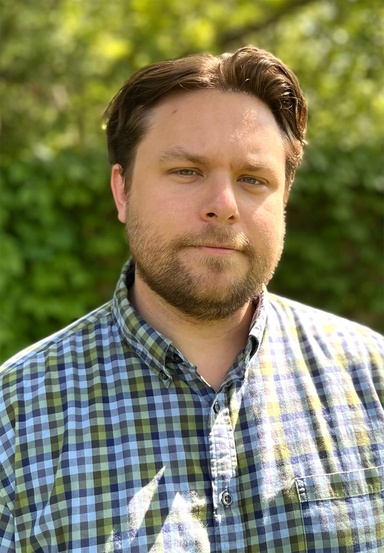
John Tappen, a PhD candidate in American Studies in CLAS, explores the cultural history of the gig economy—or what the Bureau of Labor Statistics calls nonstandard work—for artists, culture-makers, and other workers in the 20th and 21st centuries. His dissertation examines how gig work is depicted in advertising, popular fiction, cinema, and journalism.
This summer, Tappen is creating quantitative data visualizations that reflect the decline of standard employment practices and the growth of part-time and temporary work arrangements.
“This fellowship is an incredible opportunity to expand on my dissertation research while developing new competencies in data visualization, website design, and other skills that will enable me to convey my research to overlapping audiences, scholarly or otherwise.”
Tappen’s dissertation advisor is Eric Vázquez, associate professor, Department of American Studies in CLAS. He expects to complete his degree in May 2027.